What the S&P 500 Needs to Reclaim Record Highs—and What It’ll Take for Other Indexes to Exit Correction Mode
Wall Street doesn’t react quietly—especially when tariffs and central bank drama take center stage.
On Thursday, the S&P 500 officially exited correction territory, closing more than 10% above its recent low, which was set in the aftermath of President Trump’s April 2 announcement of new tariffs, dubbed “liberation day.” That announcement sent shockwaves through the market, culminating in a new low on April 8.
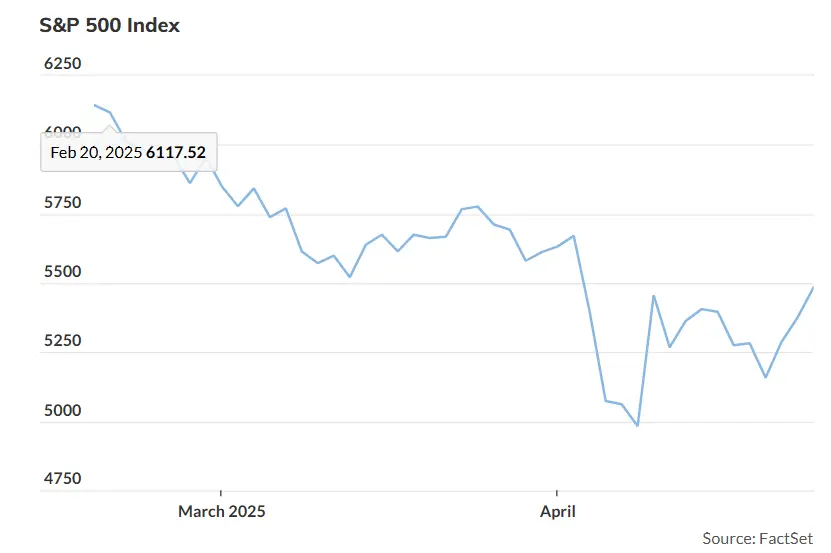
The very next day, April 9, market fears intensified with liquidity concerns and bond market volatility. Trump responded by announcing a 90-day pause on tariffs for most countries—excluding China. That helped stabilize sentiment.
Since the April 8 low, the S&P 500 has rebounded sharply, recapturing $4.253 trillion in market value, according to Dow Jones Market Data. Despite this comeback, the index still sits 10.7% below its record closing high from February.
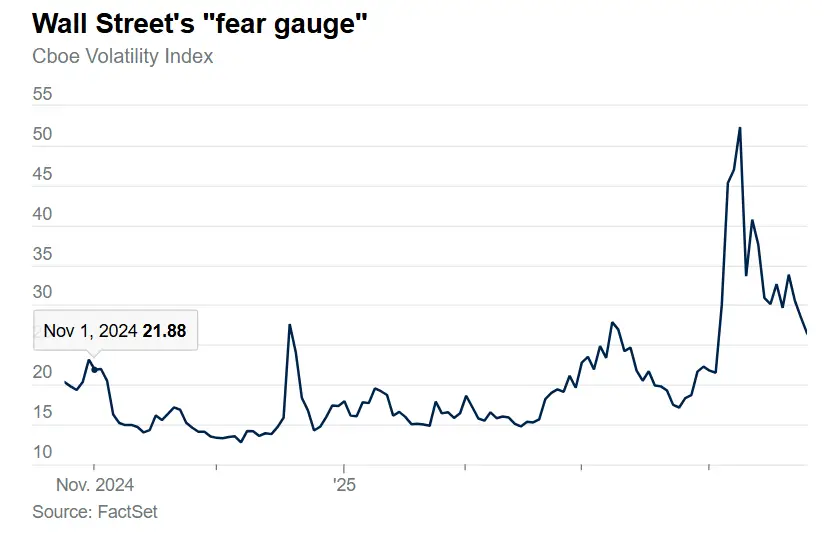
According to Jamie Cox, managing partner at Harris Financial Group, the recent volatility was to be expected. He pointed to the Cboe Volatility Index (VIX), Wall Street’s “fear gauge,” which spiked above 50 before dropping quickly to near 20. “When that unwinds, you’re going to see dramatic moves in the opposite direction,” he explained.
Helping fuel the rebound was President Trump’s decision to dial down criticism of Federal Reserve Chair Jerome Powell, stating he doesn’t intend to remove him before his term ends in May 2026. That eased investor concerns and contributed to a three-day surge in stocks.
Libby Cantrill and Tiffany Wilding of Pimco noted in a client update that removing Powell could actually backfire on Trump’s push for lower interest rates. Investors seemed to agree, as the 10-year Treasury yield fell another six basis points Thursday to 4.32%, following its most volatile week since 1987.
“The market reacts to what the Fed might do,” Cox added. “Removing that uncertainty is a big deal.”
Looking forward, Cox believes that if Trump can make progress on trade deals and avoid further Fed clashes, stocks could return to record highs. The return of Congress next week could also spark optimism—especially if lawmakers move toward a budget agreement and resolve the debt-ceiling standoff.
Tariff developments, however, remain a key wildcard. Cox expects U.S.-China negotiations to take years, but believes agreements with Europe and other countries could materialize sooner.
Here’s where the major indexes stand:
- The S&P 500 rose 2% Thursday to close at 5,484.77.
- The Dow Jones Industrial Average climbed 1.2%, finishing at 40,093.40. It would need to close above 41,410.15 to exit correction territory.
- The Nasdaq Composite surged 2.7% to 17,166.04, but remains in a bear market. It needs to close at 18,321.50 or higher to climb out.