The OBBBA Could Deliver a Fresh Tailwind for Equities in 2026
Most equity analysts expect the stock market to keep climbing in 2026, supported by continued interest-rate cuts, a resilient economy, and widening optimism around the AI boom. But Societe Generale’s Manish Kabra, head of U.S. equity strategy, says there’s another major force that could propel stocks even higher: the One Big Beautiful Bill Act (OBBBA).
In a recent note co-written with SocGen’s global head of equity strategy, Charles de Boissezon, Kabra explains that the OBBBA “authorizes one of the largest spending packages in recent history,” allocating $4.1 trillion through 2034 across defense, infrastructure, and tax-related initiatives. If temporary measures become permanent, total spending could reach $5.5 trillion.
This massive injection is expected to push annual fiscal deficits above $600 billion after 2025 before easing below $400 billion after 2030. But for equities, that may be good news: SocGen notes that profit margins historically track fiscal deficits with a one-year lead — higher deficits tend to precede higher margins.
Five Key OBBBA Themes & Beneficiary Stocks
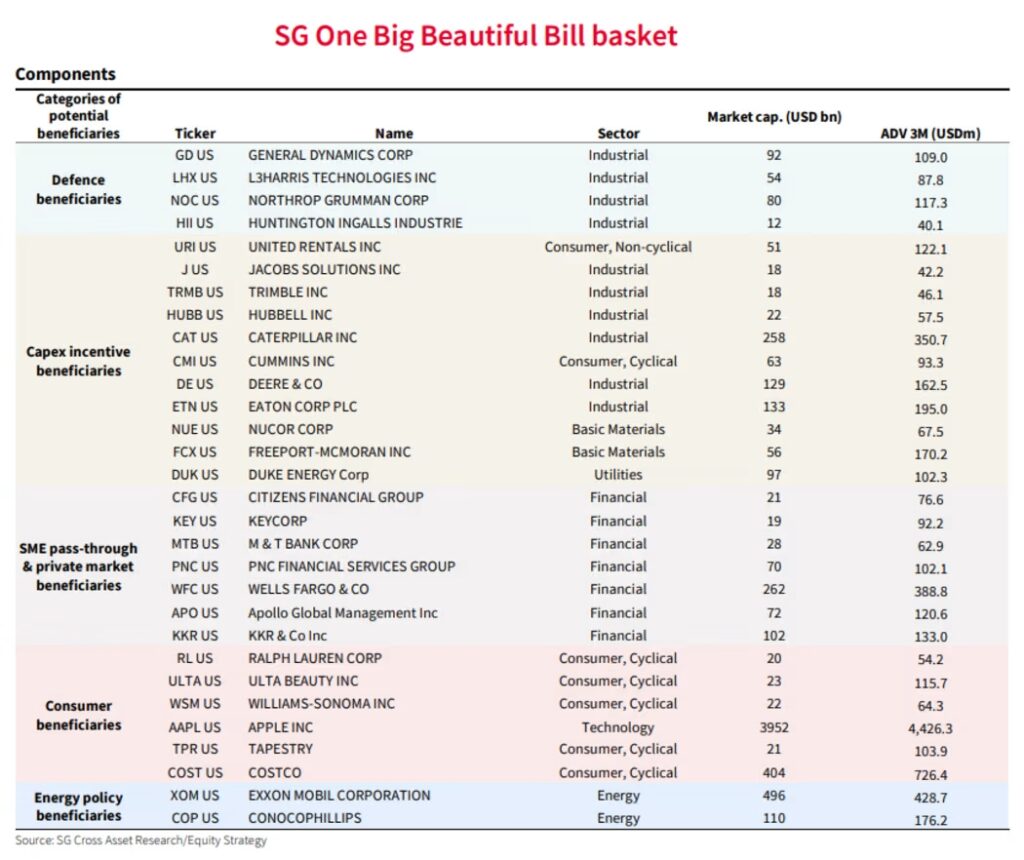
SocGen highlighted five areas of the OBBBA and built a 30-stock basket positioned to benefit:
1. “Making Capex Great Again”
The OBBBA revives and expands investment incentives aimed at boosting domestic production. These measures lower effective investment costs and improve cash flow, encouraging equipment upgrades, facility expansion, and more R&D.
Potential winners (Capex beneficiaries):
- Caterpillar (CAT)
- Cummins (CMI)
- Deere (DE)
- Eaton (ETN)
- Nucor (NUE)
2. Defense Spending Surge
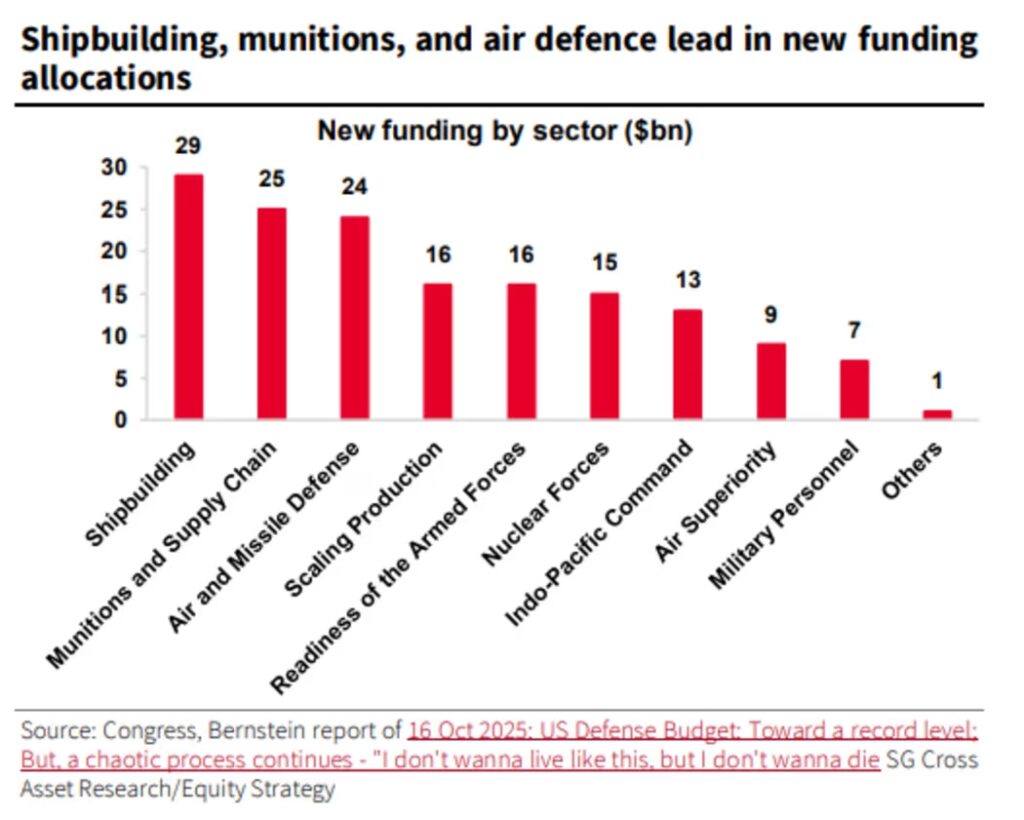
Roughly $150 billion—much of it front-loaded into 2026—will strengthen the U.S. defense industrial base, including critical minerals supply chains.
Potential defense beneficiaries:
- General Dynamics (GD)
- L3Harris (LHX)
- Northrop Grumman (NOC)
- Huntington Ingalls (HII)
3. Tax Changes Boosting Household Income
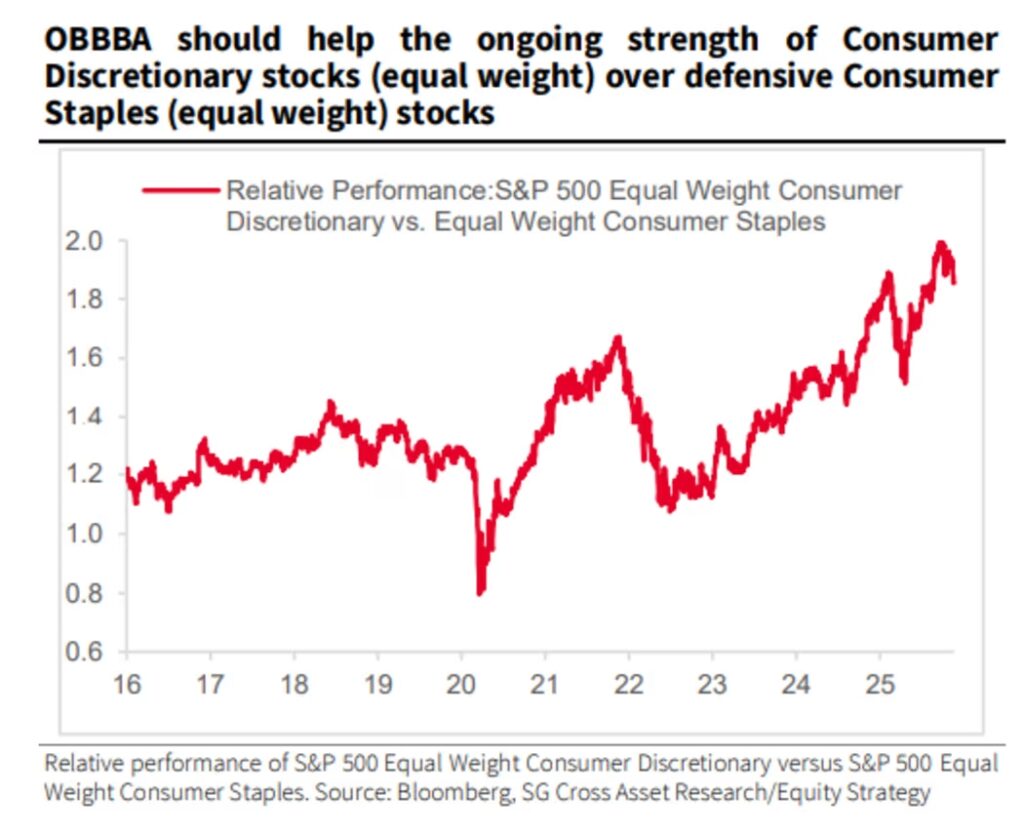
OBBBA tax provisions should lift disposable income, mainly for middle- and high-income households. This supports consumer discretionary sectors such as retail, autos, and leisure. However, cuts to SNAP and Medicaid could pressure lower-income consumers and weigh on staples and discount retailers.
Potential consumer discretionary beneficiaries:
- Ralph Lauren (RL)
- Tapestry (TPR)
- Costco (COST)
4. Support for Small Businesses
Targeted tax relief and expanded financing tools aim to spur early-stage investment and small-business growth. SocGen expects higher after-tax earnings for sole proprietors, stronger loan demand for community banks, and improved exit conditions for early-stage investors.
Potential small-business/finance beneficiaries:
- KeyCorp (KEY)
- M&T Bank (MTB)
- Apollo (APO)
5. Energy Sector Upside
OBBBA is positioned as a clear win for oil, gas, and coal producers—especially those operating in Alaska and the Gulf. It marks a setback for large wind and solar developers reliant on federal land. Oil and gas leasing is expected to restart both onshore and offshore.
Potential energy beneficiaries:
- Exxon Mobil (XOM)
- ConocoPhillips (COP)
SocGen concludes with a full list of the OBBBA equity basket, which groups companies most likely to gain from this expansive and politically significant fiscal package.