Equities May Already Be Pricing In More Fed Rate Cuts
U.S. stocks are poised to kick off the second half of 2025 at record highs, with the S&P 500 up nearly 24% from its mid-April lows. But as summer approaches—a season historically prone to volatility—investors are asking whether this strength is sustainable.
Mike Wilson, Morgan Stanley’s top equity strategist, believes it is. In a new note released Monday, he outlines three reasons for his continued bullishness over the next 6 to 12 months.
1. Improving Earnings Outlook
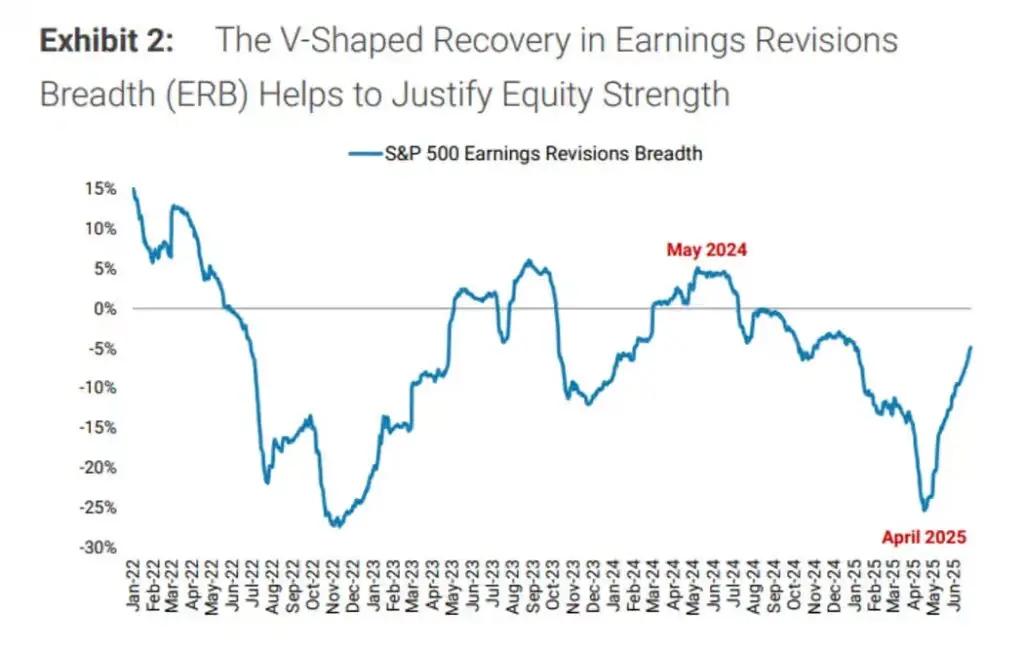
Wilson points to a notable improvement in S&P 500 earnings forecasts. Concerns about the impact of the Trump administration’s trade policies on corporate profits have eased, and optimism is no longer limited to just Big Tech. The breadth of earnings revisions—a key metric of how widespread forecast changes are—has improved dramatically, rising from -25% in mid-April to -5% today.
This kind of inflection has historically led to strong market returns, Wilson says. He notes, however, that gains are likely to concentrate first in high-quality large caps before spreading to smaller or lower-quality stocks. He also highlights that corporate earnings are now expected to outpace broader economic growth, driven in part by a weaker dollar and new tax incentives under the Trump administration’s proposed “Big, Beautiful Bill.”
2. Market Anticipating Fed Easing
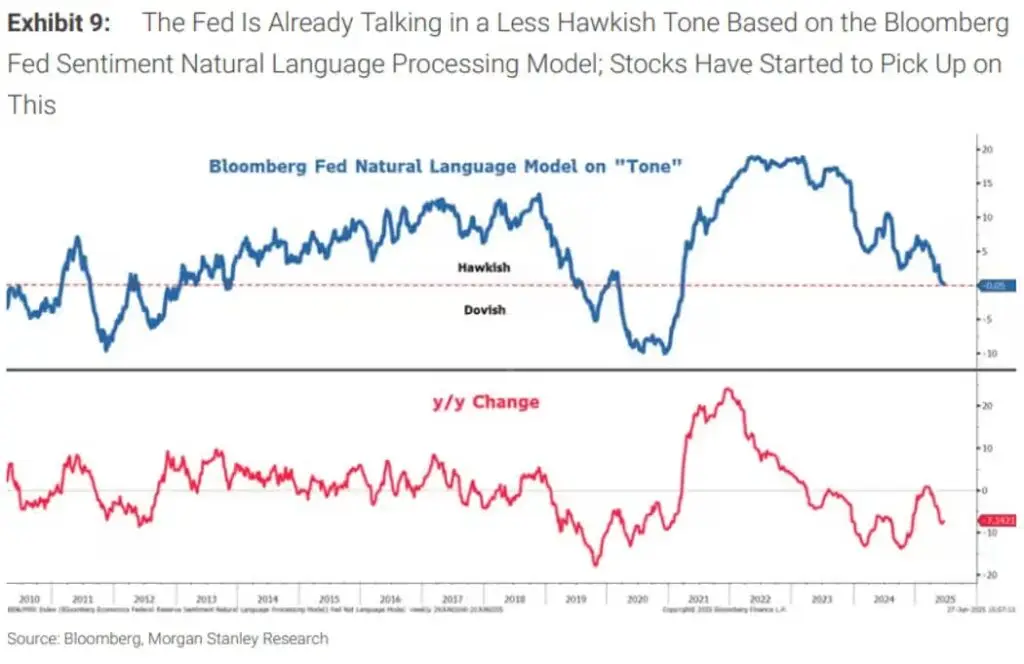
Wilson believes the Fed is likely to cut rates seven times in 2026 as unemployment becomes a bigger concern than inflation. While official policy hasn’t shifted yet, Wilson argues the market is already front-running a more dovish stance.
“The equity market won’t wait for an explicit signal from the Fed,” he writes. “It’s already starting to price in policy easing.”
The primary risk to this outlook would be a sharp rise in unemployment and a string of weak payroll numbers—though Morgan Stanley economists don’t see that as the base case.
3. Resilience to External Shocks
Wilson also sees stocks following a familiar pattern of quickly stabilizing after geopolitical shocks. As tensions between Israel and Iran ease, oil prices have come down, alleviating fears of higher energy costs derailing the recovery.
Another tailwind: a proposed ‘revenge tax’ on U.S. investment—once seen as a deterrent—is now expected to be dropped from the final version of the “Big, Beautiful Bill.”
Additionally, a decline in the Treasury term premium over the past month suggests investors are less worried about the U.S. fiscal outlook. With the 10-year yield holding below 4.5%, Wilson sees reduced interest rate risk in the near term.
He maintains his 12-month S&P 500 target at 6,500.