Earnings momentum and a supportive Federal Reserve could keep market valuations elevated, according to Morgan Stanley strategist Mike Wilson.
The buying dip mentality remains strong. S&P 500 futures opened the week 1.5% above Friday’s intraday low, underscoring continued bullish sentiment.
In a new Monday note, Mike Wilson — Morgan Stanley’s chief U.S. equity strategist — said the firm is raising its 12-month S&P 500 target to 7,800, up from his prior mid-2025 forecast of 7,200. From current levels, that implies roughly 16% upside. Even if the index climbs past 7,000 this year, Morgan Stanley still expects double-digit gains into 2026.
Wilson says next year’s economic backdrop will shift toward growth-friendly catalysts, including tax cuts and deregulation, reversing the drag from current policies such as tariffs and government job reductions.
“A new bull market and rolling recovery began in April,” Wilson writes. “It’s still early, and not obvious yet for many lagging parts of the economy.”
This environment sets the stage for stronger corporate earnings. Morgan Stanley expects companies to benefit from positive operating leverage, improved pricing power, and AI-driven efficiency gains. Wilson notes strong evidence already emerging: third-quarter results delivered a 2.2% revenue beat rate for the S&P 500 — double the average — and 8% median EPS growth in the Russell 3000, the fastest in four years.
The firm forecasts S&P 500 earnings per share at $272 in 2025 (12% growth), $317 in 2026 (17% growth), and $356 in 2027 (12% growth).
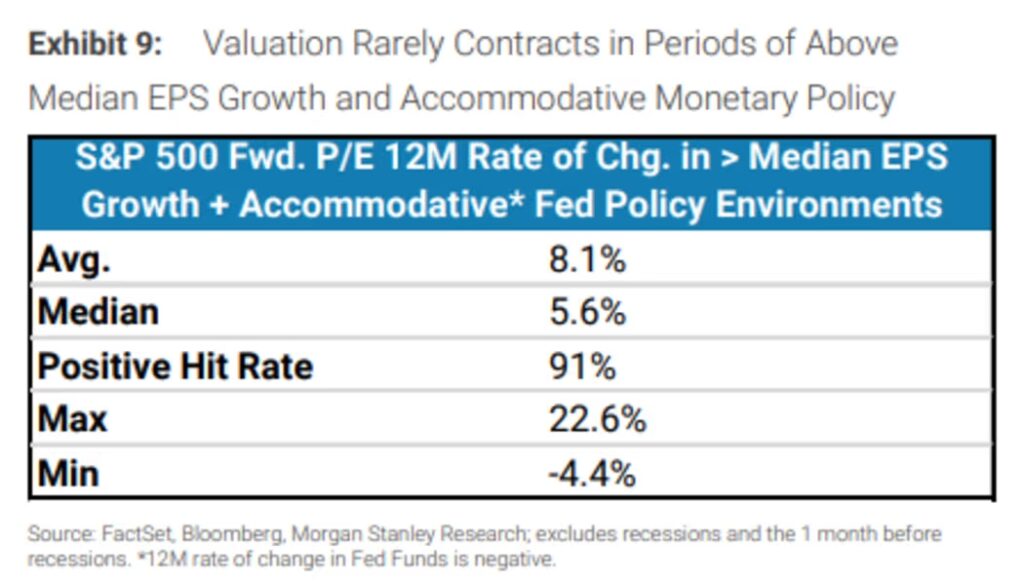
Another key tailwind: monetary policy. Wilson believes the market is underestimating just how dovish the Federal Reserve may become over the next 6–12 months. Softer labor data and the administration’s willingness to “run it hot” could create an environment of accommodative rates and balance sheet policy.
Even so, Wilson expects the market’s price-to-earnings multiple to tighten slightly from about 22.3 to 22 — still historically elevated. He notes that periods of above-average EPS growth combined with an easy Fed rarely see significant multiple compression.
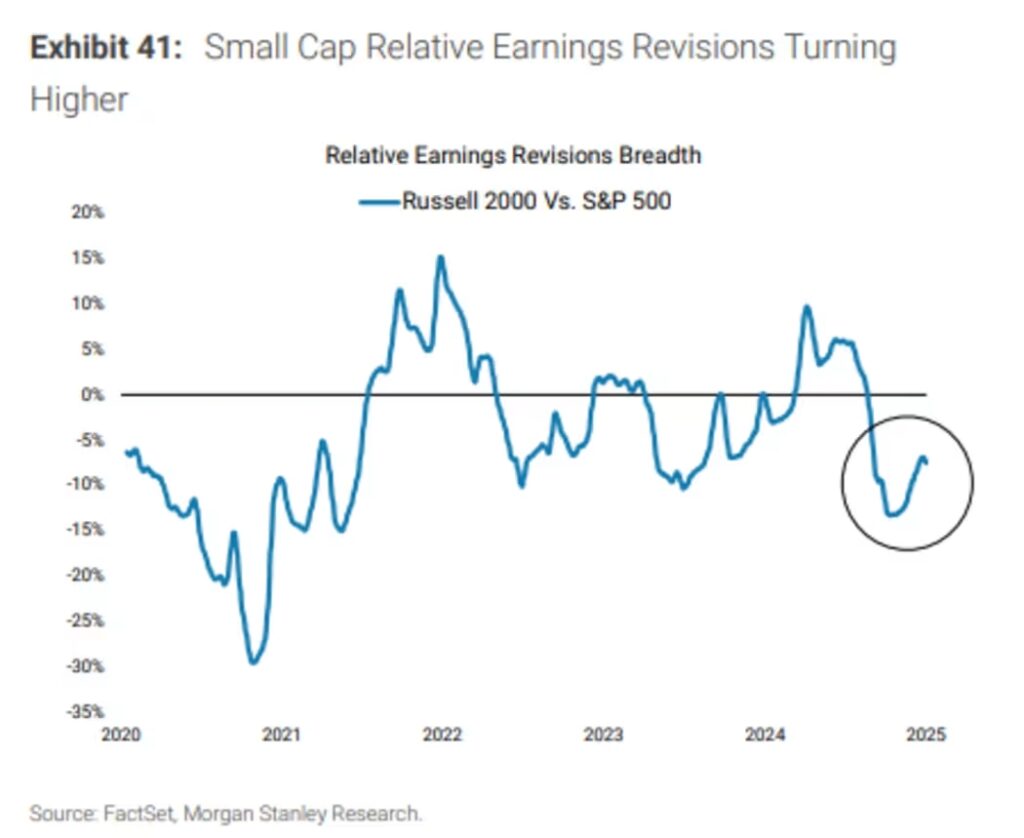
Despite recent underperformance — the Russell 2000 ETF (IWM) has lagged the S&P 500 by about 7 percentage points this year — Wilson sees market leadership broadening. He is now upgrading small caps to overweight, citing improving earnings revisions versus large caps.
He’s also shifting sector preferences. Wilson now favors the consumer discretionary goods group — including names like Amazon, Dick’s Sporting Goods, AutoNation, and Wayfair — over services, due to improving earnings trends and historically low relative performance levels that are beginning to turn up.
Morgan Stanley is also maintaining an overweight stance on financials, and upgrades healthcare to overweight, calling it the firm’s preferred “quality growth” exposure.