Mike Wilson Warns: Equities Could Be Vulnerable to Liquidity Stress
The major indices — the S&P 500, Dow, and Nasdaq — all reached fresh record highs last week.
The S&P 500 has surged 33.75% from its April low, marking a 13.3% gain year-to-date. Investors seem to have shrugged off uncertainty around White House policies, while optimism around the AI boom continues to fuel the rally.
On top of that, there’s a more accommodating monetary policy in play, with the Federal Reserve announcing a fresh round of easing last week.
However, Mike Wilson and his team of strategists at Morgan Stanley are sounding an alarm about the risks facing the market. They caution that the Fed might not meet investor expectations, which could lead to market volatility.
Right now, traders are anticipating another 50 basis points in rate cuts from the Fed this year, reducing the current range of 4.00%-4.25%. By this time next year, the fed funds futures market is forecasting a rate of around 3%.
Wilson, however, suggests the economy might not require such aggressive rate cuts.
“Our view is that the rolling recession ended with what we called ‘Liberation Day,’ and we’re now transitioning into an early-cycle recovery where earnings growth is likely to outperform expectations,” he says.
This shift is supported by an increase in earnings revisions from analysts, which is in line with other indicators like the ISM Purchasing Managers’ Index, Wilson adds.
He notes that pent-up demand is becoming increasingly visible in sectors that have seen weak growth over the past few years. These include housing, consumer goods, industrials, transportation, and commodities.
Given this backdrop, Wilson believes the Fed isn’t as dovish as it usually would be at this stage in the economic cycle. That’s because one part of its mandate, the labor market, isn’t as weak as expected, and inflation remains above its 2% target.
“The tension between the Fed’s policy response and the market’s demand for faster rate cuts is a key risk for equities, especially in this historically weak seasonal window for performance,” he warns.
Wilson points out that the equity market’s strong correlation with falling real yields — a sign that bad economic data is seen as positive for stocks — is evidence that investors are hoping for more rate cuts.
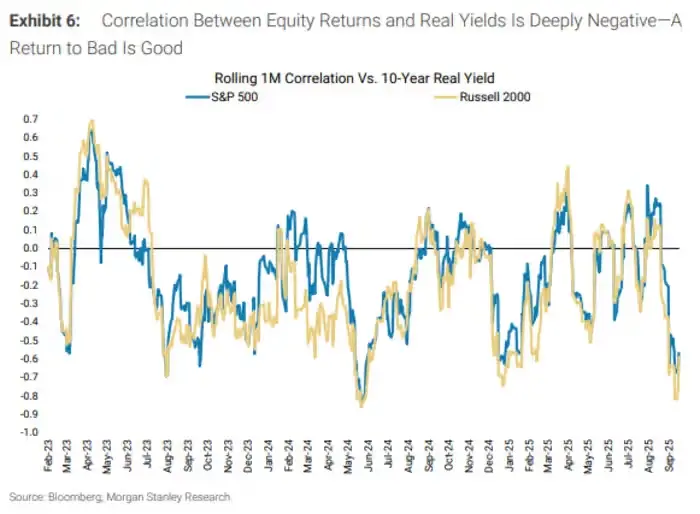
The risk, however, is that the Fed might recognize the ongoing economic transition and decide that aggressive easing isn’t necessary. While that could be the right move for the economy, it would likely disappoint markets, which have priced in further cuts. This could also prevent a full early-cycle market rotation, potentially benefiting lower-quality stocks and small caps.
Additionally, Wilson highlights the potential dangers of liquidity stress as the Fed continues its quantitative tightening and the Treasury ramps up bond issuance, alongside high levels of corporate debt sales.
One key sign to watch for liquidity strain is the spread between the Secured Overnight Financing Rate (SOFR) and the Fed Funds rate. Traders should also monitor the BofA Merrill Lynch MOVE index, which tracks Treasury market volatility. A sharp rise in the MOVE, currently at a four-year low of 72.5, could signal growing tension in the Treasury market.
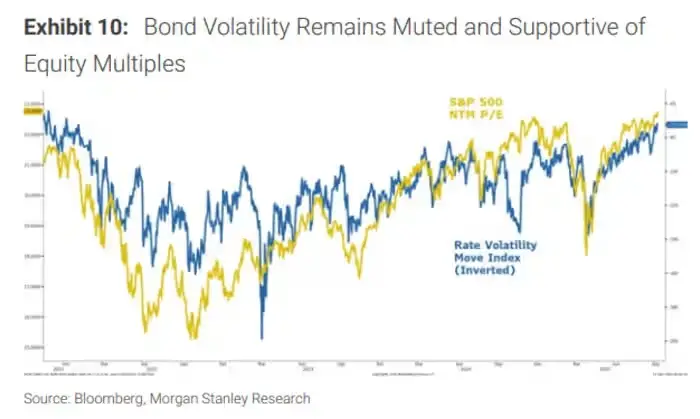
“Though it’s not a concern yet, we believe liquidity stress could show up in these indicators first,” Wilson says. “If the Fed doesn’t address these potential risks, we could see a sharp equity market correction.”