The stock market’s wealth effect is set to fuel even stronger growth, says Ed Yardeni.
The S&P 500 just logged its 20th record close of the year, while investors shrugged off Nvidia’s latest results, closing out a supportive earnings season. Another tailwind is policy expectations: futures now assign an 85% chance that the Federal Reserve will cut rates by 25 basis points in September, ahead of Friday’s PCE inflation release.
In a note shared with MarketWatch, Yardeni argued that lower borrowing costs will lift equities further “as valuation multiples continue to move up.” But he cautioned the Fed risks stimulating an economy that shows little need for added support.
He points to several signs of underlying strength:
- Labor market: Jobless claims remain low, and continuing claims suggest unemployment duration is stabilizing.
- Economic growth: Q2 GDP was revised up to 3.3%, while real gross domestic income surged 4.8%—both at record highs.
- Corporate health: Cash flow held steady at $4 trillion (saar) in Q2, fueling capital investment, particularly in tech.
- Economic surprises: Citigroup’s surprise index jumped to 26.8, undermining recession fears.
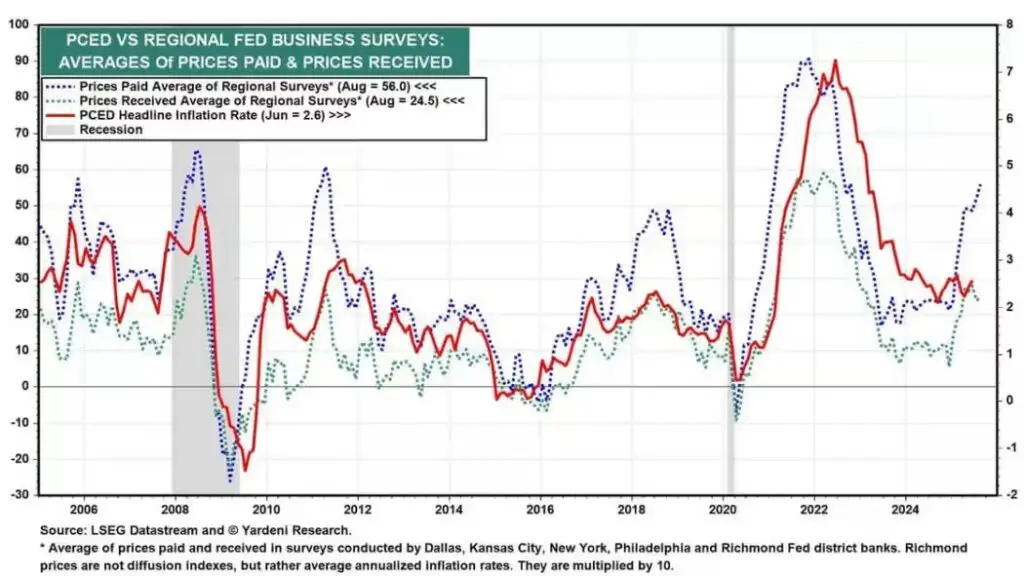
- Inflation signals: Regional Fed surveys show price pressures building, with prices-paid indexes at their highest since 2022.
While companies have been absorbing higher costs, Yardeni warns more may begin passing them on to consumers soon.
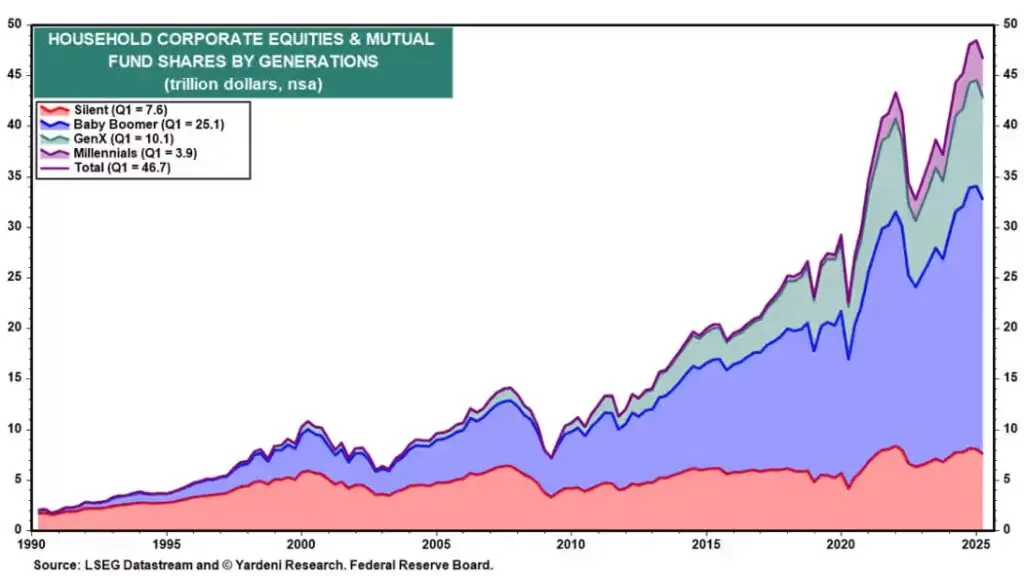
Still, the “final kicker,” he says, is that rate cuts would further supercharge a bull market already making investors wealthier. A Gallup poll found 62% of Americans owned stocks at the end of 2024—the most since 2008. At Q1’s end, households held $46.7 trillion in equities and mutual funds, with baby boomers controlling 54% of that and an $82 trillion net worth overall.
“The positive wealth effect will continue to stimulate the economy, which doesn’t really need more stimulus,” Yardeni concludes.