The Ultimate Yearly Trading Roadmap: How Trader Psychology Changes Every Month
📅 Jump to:
January | February | March | April | May | June | July | August | September | October | November | December
Introduction
Every experienced trader eventually realizes something important:
Markets don’t change randomly—people do.
Free Day Trade To Win member account Access
NinjaTrader Free Access
Tradingview Free Access
While no two trading days are identical, human behavior follows remarkably consistent patterns throughout the year. New Year’s resolutions, quarterly business cycles, tax deadlines, vacations, holidays, earnings seasons, institutional portfolio adjustments, and changing investor sentiment all contribute to recurring market tendencies that professional traders learn to recognize.
That’s why January often feels completely different from August, and why October frequently trades differently than December. Members in the day trading mentorship get access to systems and indicators that focus on what each month brings.
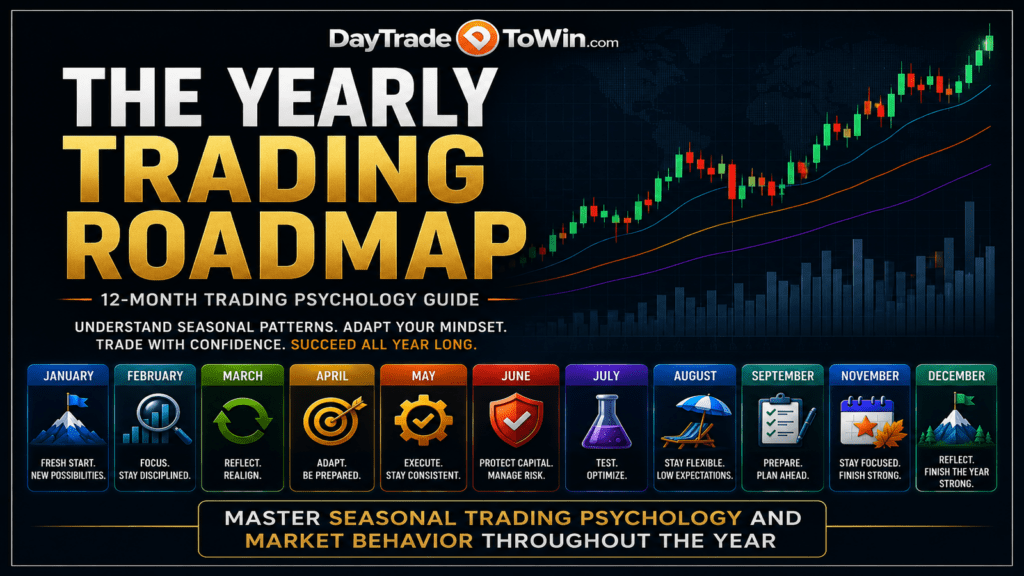
These recurring shifts don’t guarantee future price movement, nor should they ever be viewed as predictions. Instead, they provide valuable context that helps traders understand the environment they’re operating in. Knowing whether institutions are actively positioning, liquidity is expanding or contracting, or retail participation is increasing can help traders adjust expectations and risk management accordingly.
Over the past two decades, day trade to win members using Price action software focus on what the charts are telling use before placing trades. We’ve observed that successful traders don’t simply rely on indicators or trading systems—they learn to adapt to the changing personality of the market throughout the year.
This Yearly Trading Roadmap summarizes those seasonal tendencies month by month. Each section explores the psychological mindset of traders, common market characteristics, liquidity trends, volatility expectations, and practical insights that can help you approach each month with greater awareness.
Whether you’re trading futures or day trading stocks, forex, or cryptocurrencies, understanding how the market environment evolves throughout the trading calendar year can become another valuable tool in your trading arsenal.
Let’s begin with the month that often brings the highest optimism—and sometimes the biggest expectations.
January – The Fresh Start
January Trading Psychology: Starting the Year with a Fresh Perspective
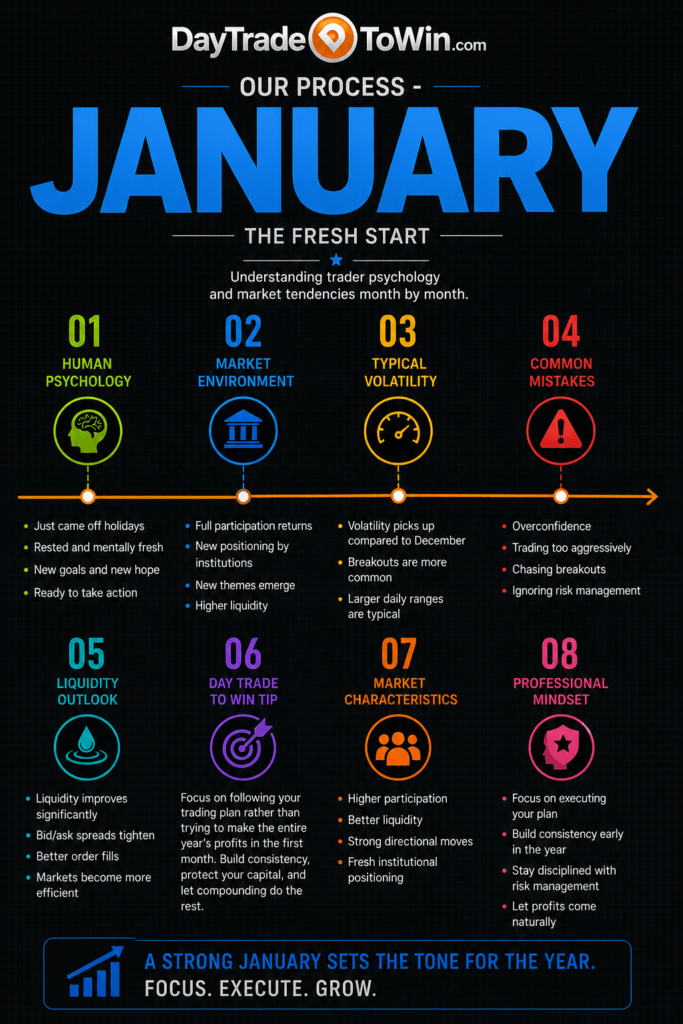
January represents a fresh beginning for both traders and financial markets.
New trades just starting out can get a free member account to start their trading journey. After the holiday season, traders return rested, optimistic, and motivated to pursue new goals. Institutional investors begin repositioning portfolios, liquidity improves, and new market themes often emerge.
While this renewed participation can create excellent trading opportunities, it can also lead to overconfidence as traders attempt to make the entire year’s profits during the first few weeks. The key to January is building disciplined habits, following your trading plan, and focusing on consistency rather than chasing aggressive gains.
February — Back to Reality
February Trading Psychology: Settling Into Reality
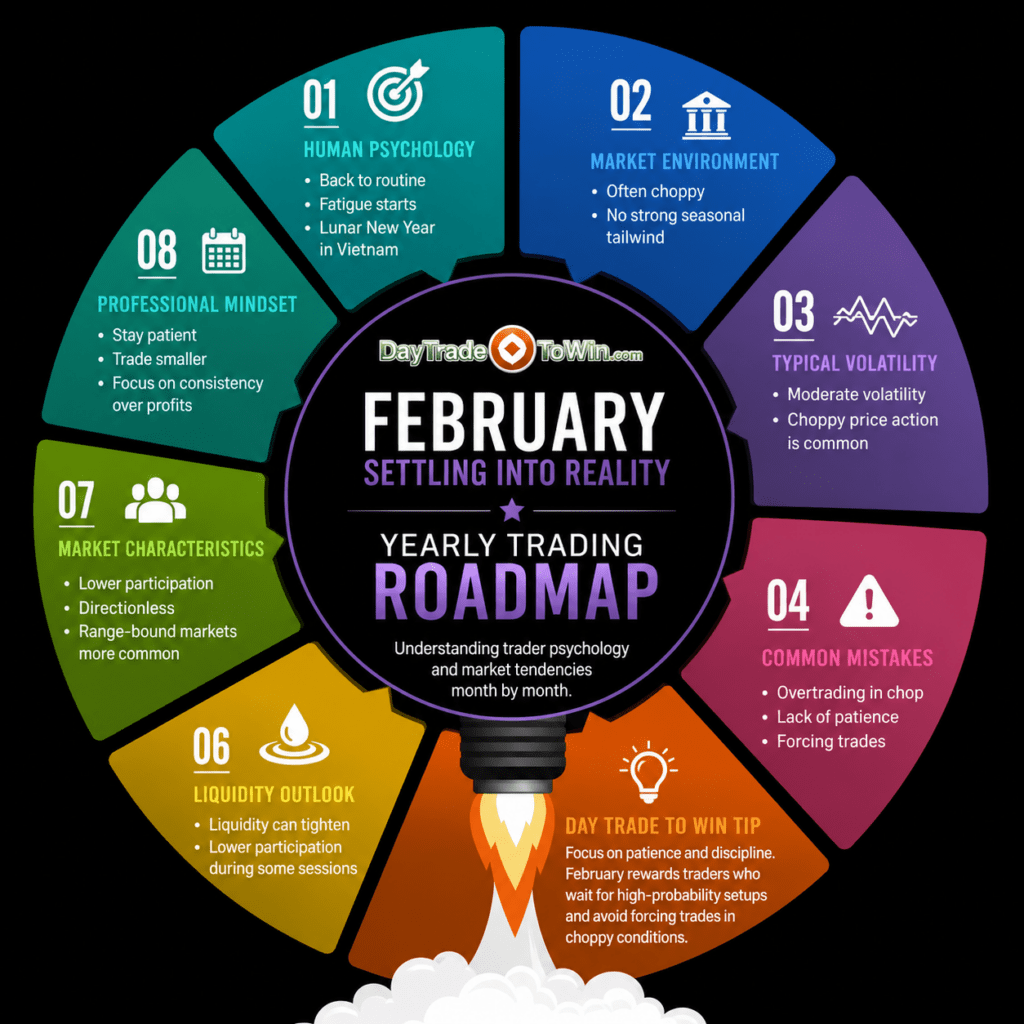
After the optimism of January, February often marks the transition back to reality. The excitement of a new trading year begins to fade as traders settle into their routines and the market returns to a more balanced rhythm. Liquidity remains healthy, but price action frequently becomes choppier as institutional positioning slows and market participants wait for new catalysts.
Professional traders recognize that February rewards patience, disciplined execution, and selective trading. Rather than forcing opportunities, this is the time to refine your process, focus on high-quality setups, and continue building consistency for the months ahead.
March — Reflection & Recalibration
March Trading Psychology: Reflection & Realignment
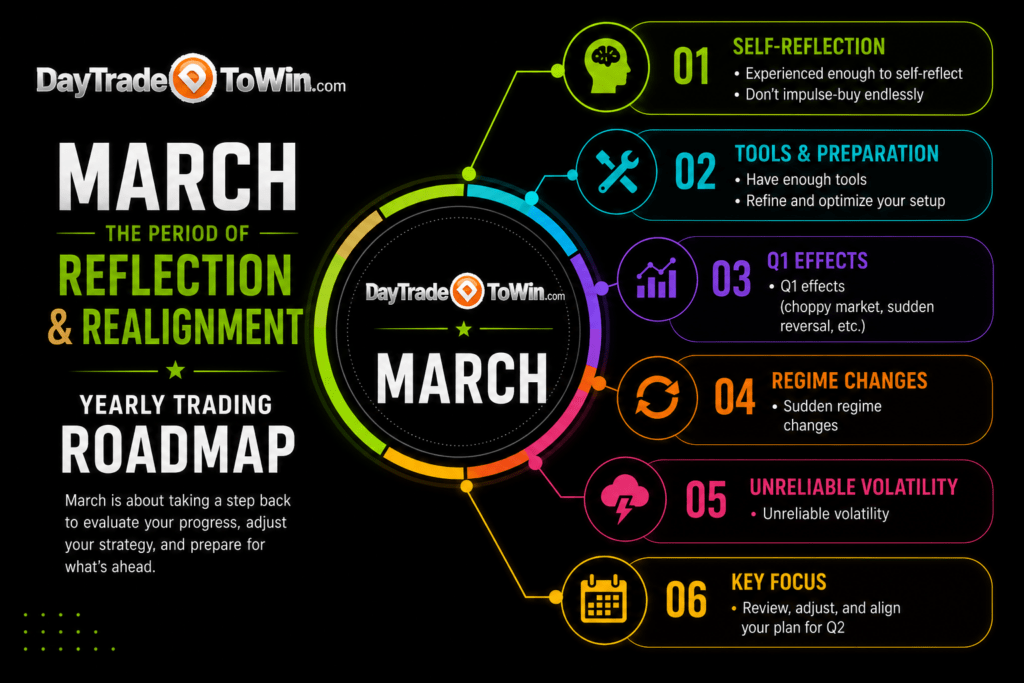
March often marks an important turning point in the trading year. By now, traders have experienced enough market activity to evaluate what’s working and what needs improvement. Using the Sonic and Blueprint trading systems can help traders understand the direction. The excitement of January has faded, and disciplined traders begin refining their strategies rather than chasing new ideas.
Markets can become more unpredictable as first-quarter positioning, economic data, and shifting institutional sentiment create sudden changes in market behavior. March rewards preparation, patience, and continuous improvement, making it an ideal time to review your trading plan before heading into the second quarter.
April — Confidence Returns – Focus, Adapt & Grow
April Trading Psychology: Building Confidence Through Consistency
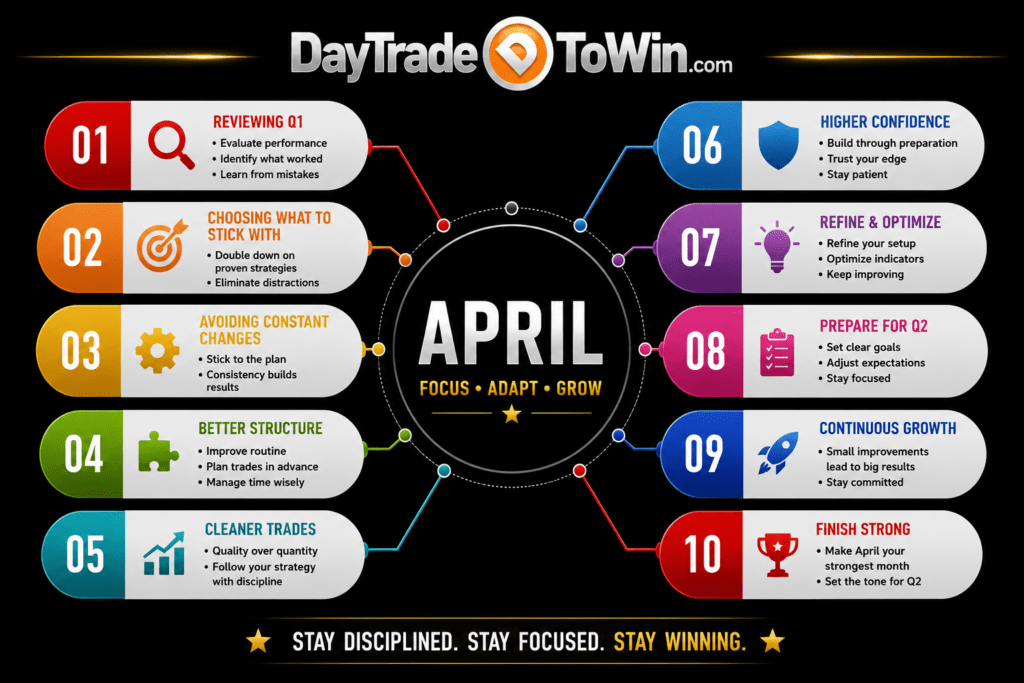
April is often one of the most productive months for disciplined traders. By now, the lessons learned during the first quarter become valuable feedback that can be used to refine trading strategies and eliminate unnecessary distractions.
Rather than constantly searching for new indicators or systems, successful traders focus on improving execution, following their trading plan, and building confidence through consistency.
Market conditions also tend to become more structured as traders prepare for the second quarter, making April an excellent time to strengthen routines, improve decision-making, and continue developing long-term trading discipline.
May — The Seasonal Shift
May Trading Psychology: Refining Your Edge Before Summer
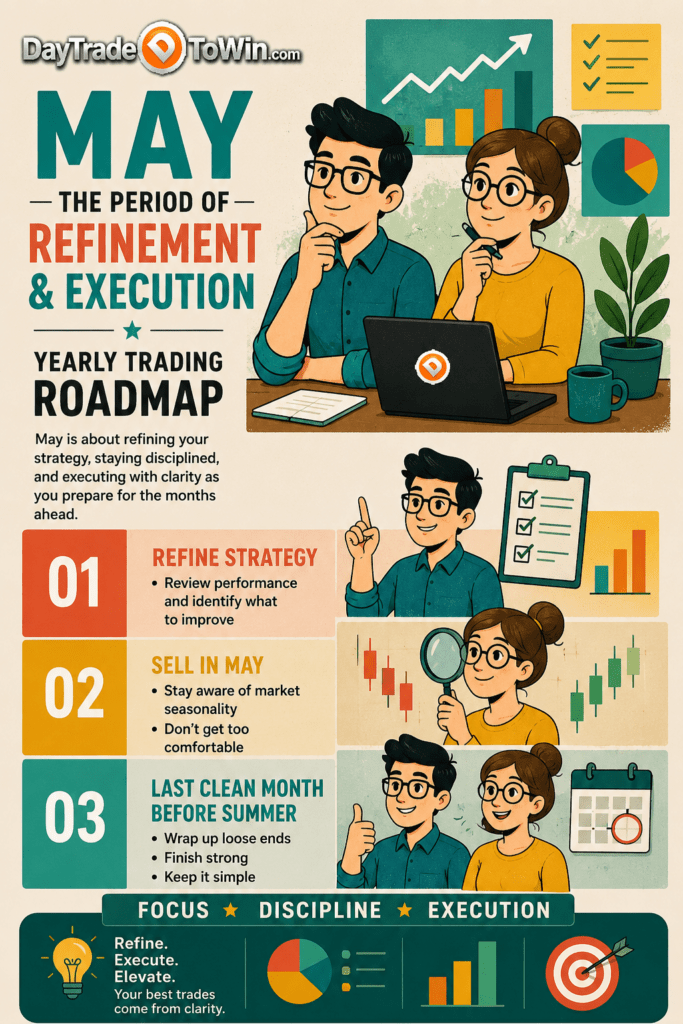
May is often a month of refinement rather than reinvention. By this point in the year, traders have accumulated several months of experience and should have a clearer understanding of what works best for their trading style.
While the well-known phrase “Sell in May and Go Away” reflects a historical seasonal tendency, professional traders understand that it serves as context—not a rule. Instead of chasing every market move, May encourages traders to review performance, simplify their approach, and execute with discipline.
As the market begins transitioning toward the slower summer months, maintaining consistency and avoiding unnecessary risk become increasingly important
June — Protecting Capital
June Trading Psychology: Protecting Your Edge Before Summer
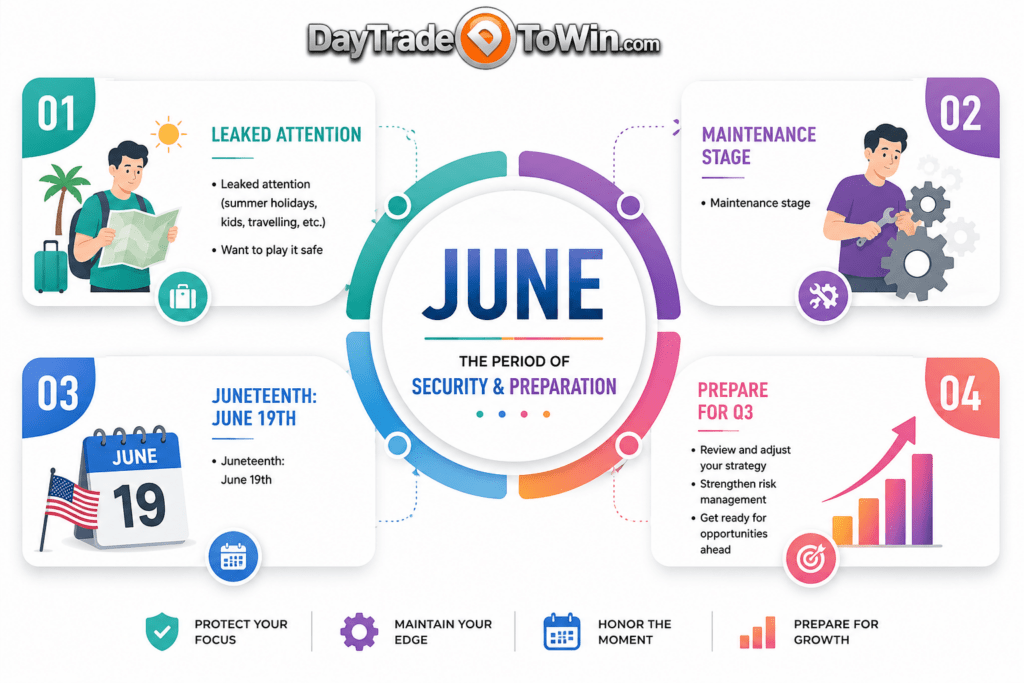
June often marks the transition from the year’s strongest trading period into the quieter summer months. As vacations, travel, and family commitments increase, both retail and institutional participation can begin to slow.
Rather than forcing trades during potentially thinner market conditions, experienced traders use June to protect their progress, fine-tune their trading plans, and strengthen their risk management.
This month is less about chasing opportunities and more about preparing for the second half of the year with discipline, patience, and consistency.
July — The Experiment Month
July Trading Psychology: Testing, Improving, and Protecting Your Capital
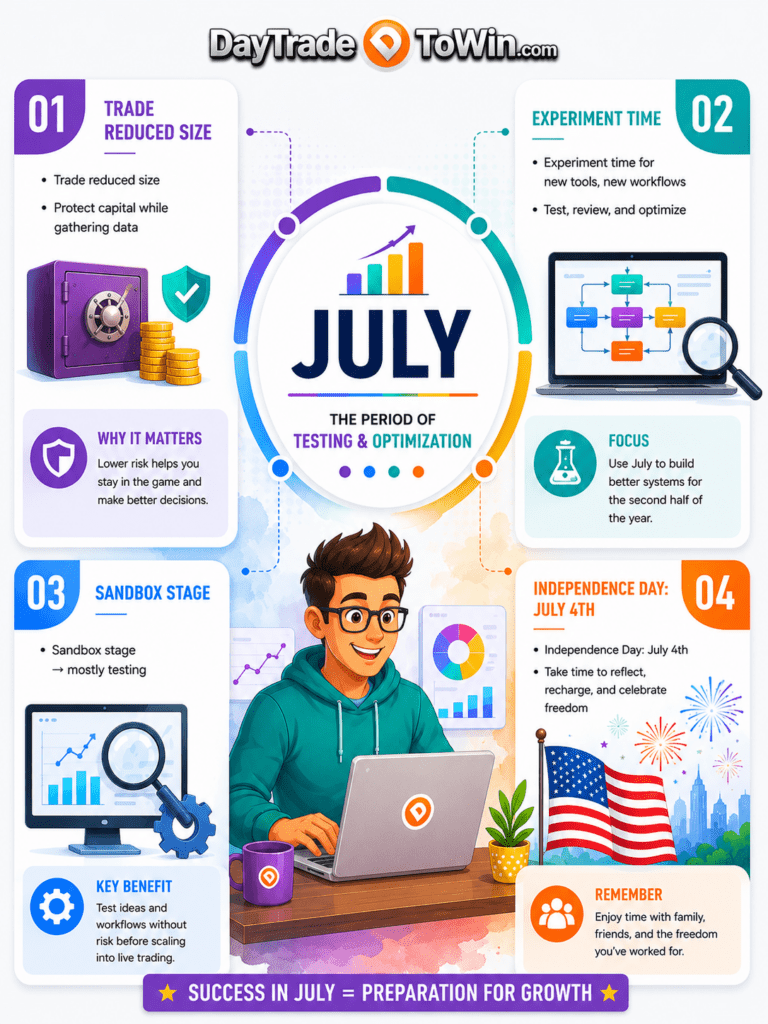
July is often one of the best months to slow down and work on your trading rather than constantly trading the markets. Summer vacations, lighter participation, and changing market conditions can reduce the quality of many trading opportunities.
Instead of increasing risk, professional traders frequently use July to test new ideas, refine workflows, optimize their trading platforms, and improve execution without unnecessary pressure. Think of July as a month for preparation—small improvements now can produce significant results during the busier trading months ahead.
August — The Quiet Market
August Trading Psychology: Reset, Recharge, and Prepare for the Next Opportunity
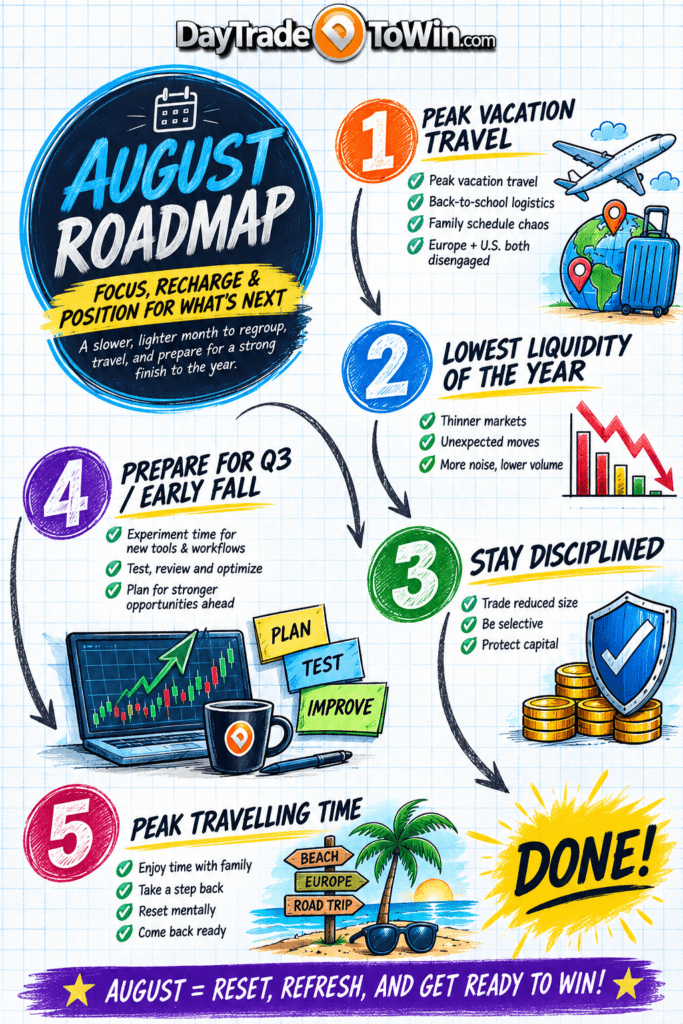
The August Trading Roadmap infographic illustrates how trader psychology and market behavior typically change during the peak summer vacation season. It covers reduced market liquidity, lighter institutional participation, increased market noise, disciplined position sizing, and preparing for the return of more active trading conditions in the fall. August encourages traders to recharge mentally, refine their trading systems, protect capital, and position themselves for the final months of the trading year
September — Back to Business
September Trading Psychology: Returning to Structure and Momentum
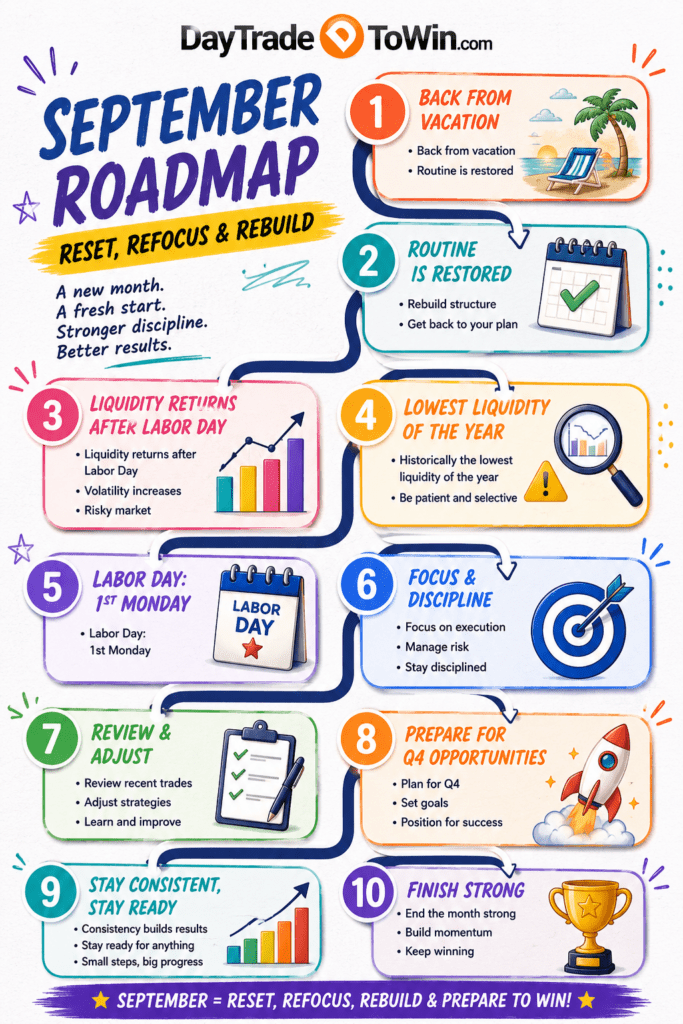
September often marks the return to normal market participation after the slower summer months. Traders, institutions, and investors return from vacation, liquidity begins to improve, and new opportunities start to emerge.
At the same time, volatility frequently increases, making discipline and preparation more important than ever. September is an excellent month to rebuild routines, review recent performance, refine your trading plan, and position yourself for the final quarter of the year. Traders who regain consistency now are often better prepared to capitalize on stronger market conditions heading into Q4.
October — Opportunity Returns
October Trading Psychology: Executing with Confidence
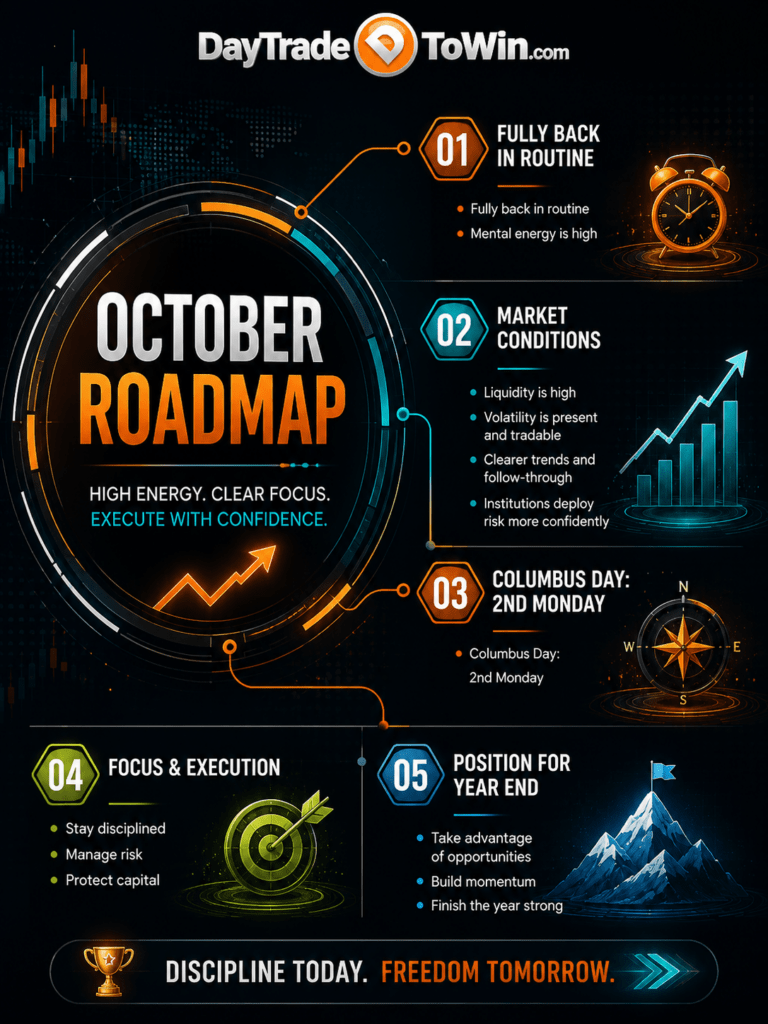
October is often one of the most active and opportunity-filled months of the trading year. Market participation is typically strong, liquidity moves improve, and institutions become more aggressive as they position portfolios before year-end.
While volatility often remains elevated, trends tend to be cleaner and follow-through can improve compared to the slower summer months. October rewards traders who remain disciplined, manage risk carefully, and execute proven strategies with confidence.
It’s an excellent time to build momentum heading into the final stretch of the trading year.
November — Momentum Builds
November Trading Psychology: Staying Flexible as the Year Winds Down
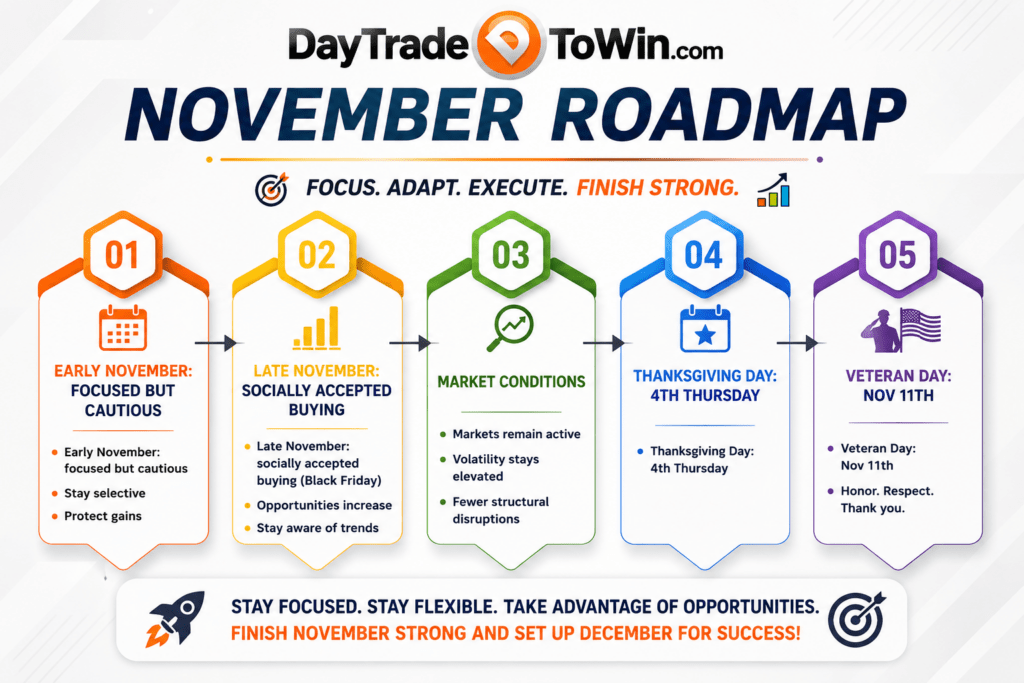
November is a unique transition month where traders can review the balance of strong year-end opportunities with changing market dynamics. Institutional participation remains healthy, but holiday schedules and seasonal events can temporarily affect trading activity.
Early November often rewards patience and selective trading, while the second half of the month can present new opportunities as markets react to year-end positioning and increased consumer activity surrounding Thanksgiving and Black Friday.
Traders who remain flexible, protect their gains, and continue following their trading plans are often well positioned to finish the year on a strong note.
December — Reflection & Preparation
December Trading Roadmap | Reflect, Realign & Finish Strong
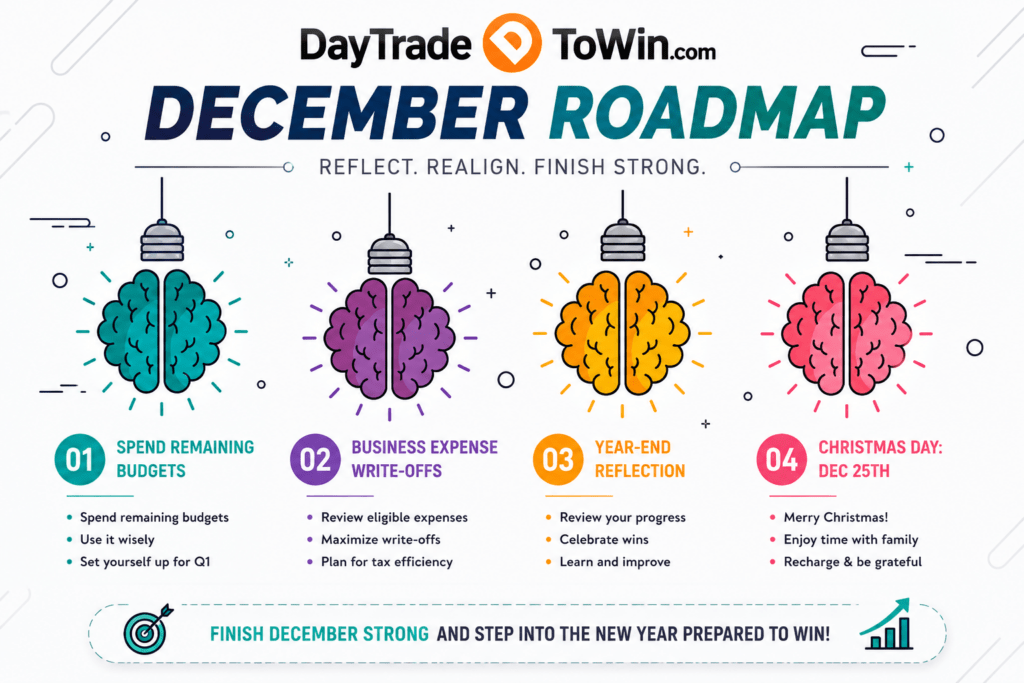
December is a month of reflection, and it is when traders can practice the ABC method, planning, and preparation. While trading activity often slows due to the holiday season and reduced institutional participation, it offers one of the best opportunities of the year to evaluate your performance and prepare for the future.
Instead of focusing solely on profits, experienced traders review their trading journals, celebrate what worked, identify areas for improvement, and build a stronger plan for the coming year. Ending December with discipline, gratitude, and clear objectives creates the foundation for a successful start in January.
A yearly trading roadmap is a month-by-month guide that helps traders understand how market psychology, liquidity, volatility, and seasonal trends often evolve throughout the year. Rather than predicting future prices, it provides context that can help traders adjust their expectations, risk management, and trading approach as market conditions change
Trader psychology is influenced by recurring events such as New Year’s goals, earnings seasons, tax deadlines, quarterly portfolio adjustments, vacations, and holidays. These events often create noticeable shifts in participation, sentiment, and market behavior throughout the calendar year.
No. Seasonal market patterns are observations—not predictions. While certain months may exhibit recurring tendencies, every trading day is unique. Successful traders use seasonal context together with price action, disciplined execution, and sound risk management rather than relying solely on historical patterns.
Summer months such as June, July, and August often experience lighter participation as institutional traders and investors take vacations. Reduced liquidity can result in different market behavior, encouraging many experienced traders to focus on protecting capital, refining strategies, and preparing for stronger opportunities later in the year.
Trading psychology influences decision-making, discipline, risk management, and emotional control. Understanding how emotions and market conditions change throughout the year can help traders remain patient, avoid impulsive decisions, and execute their trading plans more consistently.
Yes. A yearly trading roadmap helps new traders understand that market conditions are constantly changing. Learning how different months can affect liquidity, volatility, and trader behavior allows beginners to develop realistic expectations while building consistency over time.
DayTradeToWin provides educational resources, mentorship, and proprietary trading tools such as the Sonic System, Atlas Line, Blueprint, and other price action strategies designed to help traders make objective decisions across changing market environments.
No. While many examples reference futures markets, the principles of seasonal trading psychology, discipline, and market behavior can also apply to stocks, forex, cryptocurrencies, and other actively traded financial markets.
Professional traders prepare by reviewing their trading performance, adapting risk management, maintaining discipline, and adjusting expectations based on current market conditions instead of assuming every month behaves the same.
You can create a FREE DayTradeToWin Member Account to access educational videos, price action training, trading software demonstrations, and additional trading resources designed to help traders build consistency and confidence.
About DayTradeToWin
At DayTradeToWin, we’ve spent over two decades helping traders simplify their decision-making through objective trading strategies, professional education, and rule-based trading systems. Our mission is to help traders build consistency through price action, risk management, and disciplined execution—not emotion.
Whether you’re just starting out or you’re an experienced futures trader, our educational resources, indicators, and mentorship programs are designed to help you trade with greater confidence.
Explore our indicators, strategies, and training at DayTradeToWin.com.
Risk Disclaimer
Trading futures, stocks, options, cryptocurrencies, and other financial instruments involves substantial risk and is not suitable for every investor. Past performance and historical market tendencies do not guarantee future results.
The seasonal observations presented in this Yearly Trading Roadmap are educational in nature and should not be interpreted as predictions or investment advice. Always use proper risk management, trade with a written plan, and never risk capital you cannot afford to lose.

John Paul is the founder of DayTradeToWin, a trading education and software platform established in 2008 with thousands of members worldwide. He specializes in price action-based futures trading strategies and structured market analysis.
DayTradeToWin provides trading education, indicators, and software tools designed to help traders apply disciplined, rule-based price action decision-making across global futures markets.
John Paul is the creator of several trading methodologies, including the Sonic System, Atlas Line, and Trade Scalper, used by traders to identify structured opportunities in markets such as the E-mini S&P 500 (ES), Nasdaq (NQ), crude oil (CL), and gold (GC).
Official website: https://daytradetowin.com