New Tax Law Boosts Big Tech as Tariff Fears Weigh on Markets
Investors are facing mixed signals. Fresh tariff headlines have soured the mood on Wall Street, even though the S&P 500 is hovering just 0.3% below record highs. Historically, that’s not a reason to panic.
UBS data shows that when the index is at record levels, it takes an average of 105 days before a 5% pullback occurs — and during that stretch, stocks tend to outperform cash and T-bills. So while retreating to the safety of cash may feel comfortable, history suggests it’s usually not the right move.
Morgan Stanley’s chief equity strategist Mike Wilson points to a few reasons why investors remain resilient. One is skepticism that proposed tariff hikes — especially on Mexico and Canada — will actually take full effect. Goods complying with the U.S.-Mexico-Canada Agreement (USMCA) are likely to be exempt, especially if they’re fully made within the three nations or have undergone significant transformation.
Wilson’s team mapped out which industries are most exposed to tariffs by region. U.S. goods-producing sectors have the largest import exposure to China, followed by Mexico, Canada, and the EU. The biggest market risk would come from a sharp rise in China tariffs — not only due to broad industry exposure but also because of the heavy market cap weighting of those sectors. A second concern: Mexican imports that don’t qualify for USMCA exemptions.
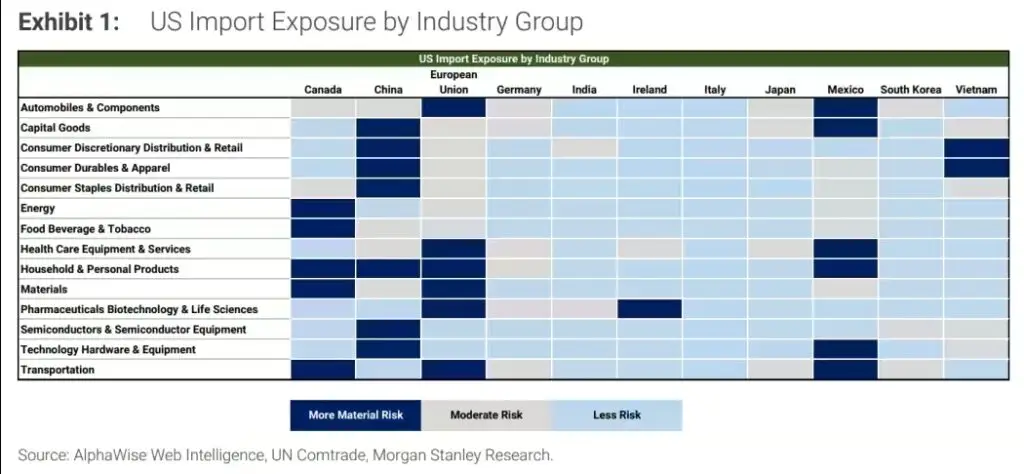
One area to watch closely is semiconductors. Tariffs on chips could ripple across U.S. supply chains, given their central role in manufacturing and tech. Strategists warn this could become a bigger issue as the administration evaluates which Section 232 tariffs to expand.
Beyond tariffs, there’s another story driving optimism: a major shift in earnings sentiment. Analyst revisions have swung from -25% in April to +3% today, with financials seeing the sharpest recovery in earnings outlooks.
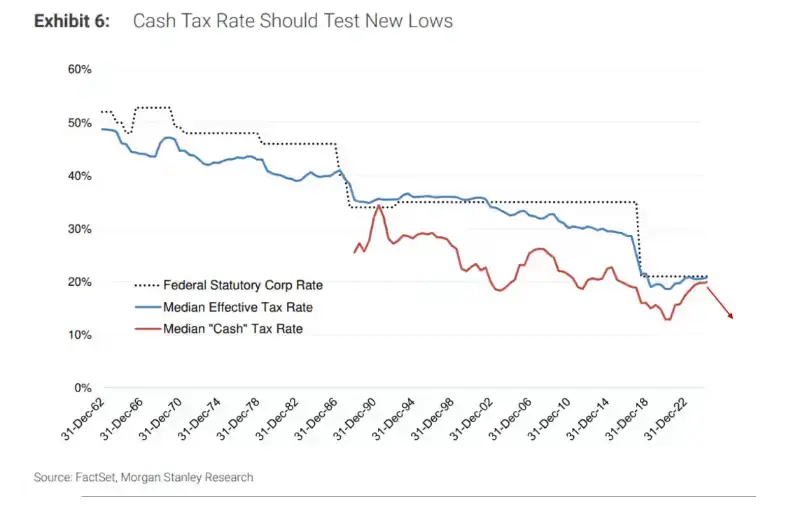
Another bullish catalyst is the newly passed tax legislation — dubbed the “One Big Beautiful Bill.” Among its features: full, upfront expensing of research-and-development costs. This change is expected to lower the effective corporate tax rate from 20% to around 13%, boosting cash flows for companies heavily invested in R&D.
While the tax change won’t affect reported earnings due to U.S. GAAP rules, it will enhance real cash generation — a likely factor behind the recent outperformance of the “Magnificent Seven” tech giants.
Companies set to benefit most from the R&D tax provision, based on their $10 billion+ deferred tax assets, include Alphabet, Amazon, Meta, Microsoft, Apple, Intel, and General Motors, according to research from an investment bank.