Price Action Meets Improving Fundamentals, Strategists Say
The ripple effects of Federal Reserve Chair Jerome Powell’s strong signal of a September rate cut lingered even after Jackson Hole wrapped up. Few assets benefited more than U.S. small caps, with the Russell 2000 jumping nearly 4% on Friday.
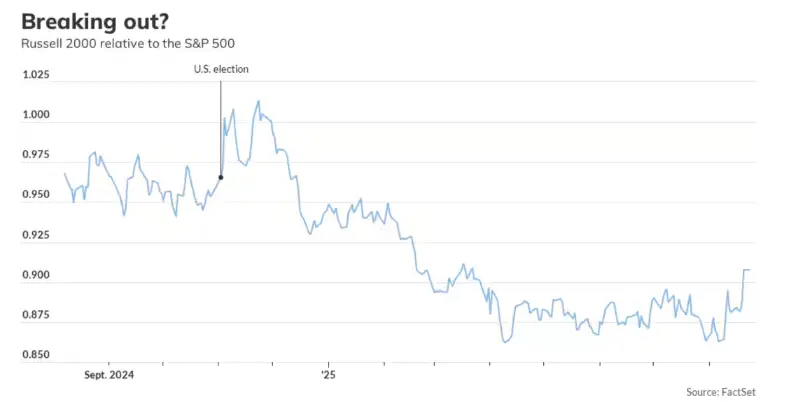
Lori Calvasina, head of U.S. equity strategy at RBC Capital Markets, noted that the significance wasn’t just the size of the move but the fact that small caps finally broke out of a long stretch of underperformance relative to the S&P 500.
“Friday’s rally could prove to be just short covering,” she cautioned, “but it may also extend further given investor positioning and the desire to see leadership expand beyond the Magnificent Seven, especially as skepticism around the AI-driven mega-cap trade resurfaces.”
If the rally continues, valuations will be key to watch. The Russell 2000 was trading at 16.3 times earnings ahead of Powell’s speech, with important milestones ahead: 17.5 (January high), 18 (November 2024 peak), and 20 (January 2021 high).
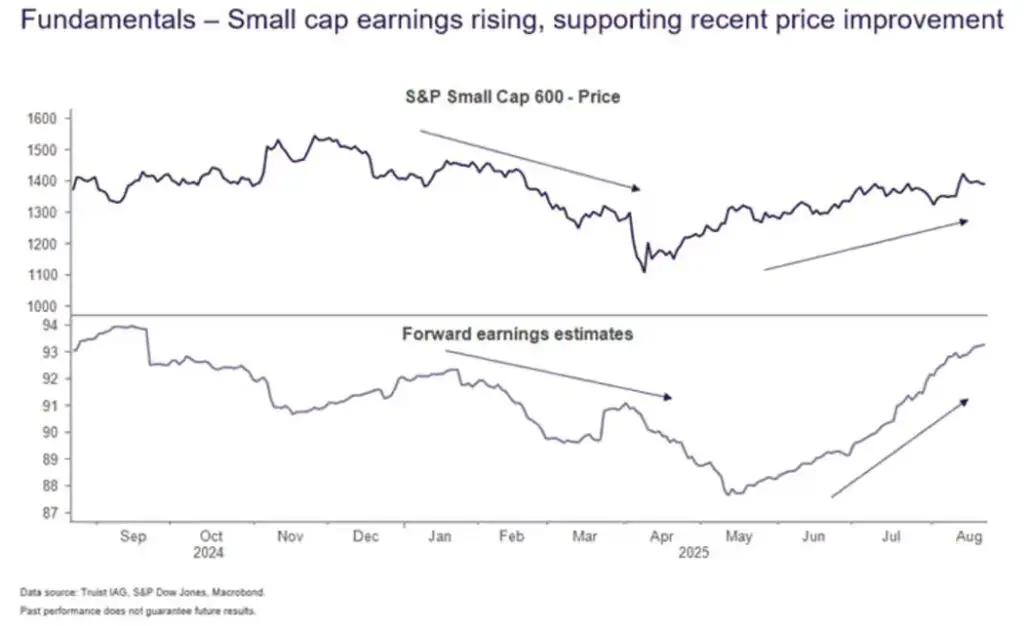
Keith Lerner, co-chief investment officer at Truist Wealth, upgraded U.S. small caps from “less attractive” to “neutral,” citing that this move is underpinned by improving earnings trends. Beyond potential Fed cuts, he pointed to interest-rate deductibility provisions in the recently passed “One Big Beautiful Bill,” which benefit more leveraged and capital-heavy companies.
Ultimately, though, small caps need a supportive economy. Nancy Lazar, chief global economist at Piper Sandler, sees reasons for optimism. She argues the U.S. is only beginning to feel the positive effects of last year’s Fed cuts and, paired with a “big beautiful policy mix” of tax relief and deregulation, economic growth could reaccelerate in 2026 — potentially reaching 3%.