
The final hours of the trading day is where decisions matter most.
Traders often find themselves asking the same question near the close:
👉 Is this move real… or is it a fakeout?
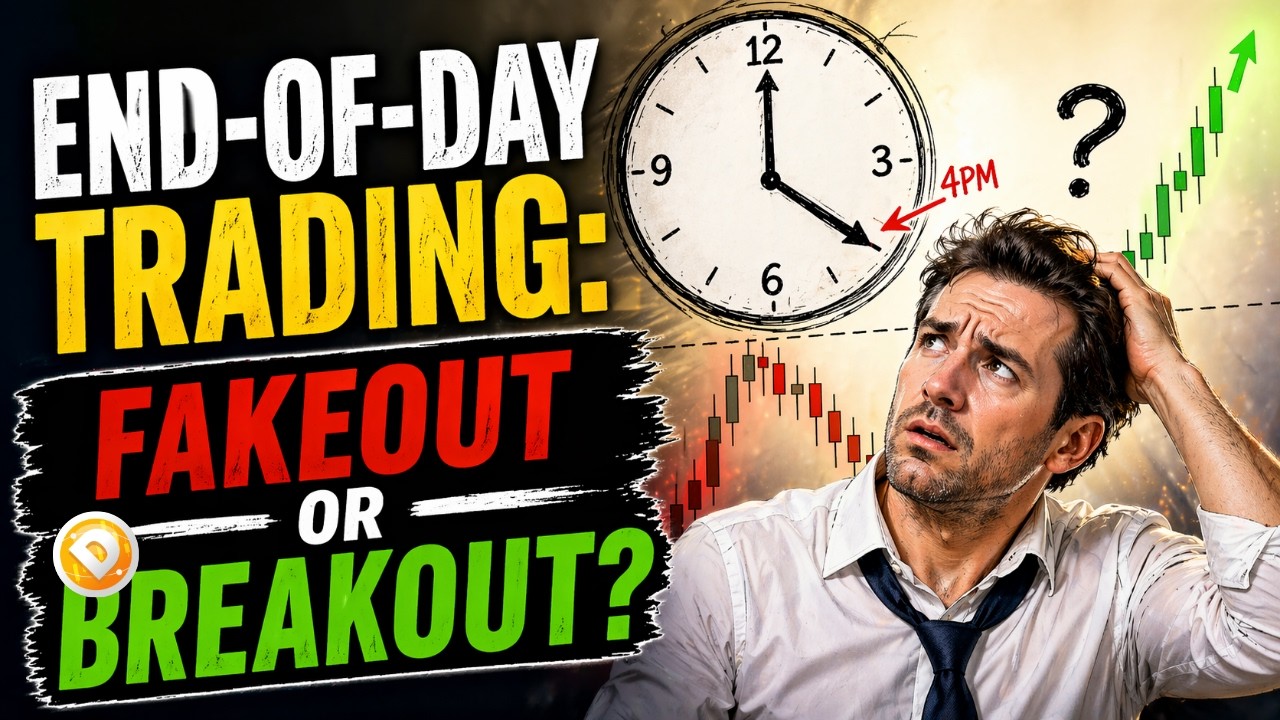
Understanding the difference between a fakeout and a breakout at the end of the day can mean the difference between a high-probability trade and a costly mistake.

Why the End of the Day Is So Important
The period leading into 4PM (market close) is unique because:
- Institutional traders finalize positions
- Volume can increase or suddenly disappear
- Trends either confirm or completely reverse
This creates an environment where:
- Strong moves can continue into the close
- Or completely collapse into a fakeout
What Is a Fakeout?
A fakeout occurs when price appears to break a key level—but fails to hold.
Common fakeout characteristics:
- Break above resistance… then immediate rejection
- Weak follow-through after breakout
- Conflicting signals across indicators
- Sudden reversal candles
👉 Many traders get trapped here by entering too early without confirmation.
What Is a Breakout?
A breakout is a sustained move beyond a key level with confirmation.
Strong breakout signs:
- Clean break of support/resistance
- Strong momentum candles
- Multiple confirmations aligning
- Follow-through into the close
👉 The key difference is confirmation, not prediction.
The Biggest Mistake Traders Make
Most traders try to predict the move.
Instead of waiting, they:
- Jump in on the first signal
- Assume the breakout will hold
- Ignore conflicting information
This leads to:
❌ Getting caught in fakeouts
❌ Overtrading
❌ Emotional decisions
The Right Approach: Confirmation-Based Trading
At DayTradeToWin, the focus is simple:
👉 Wait for confirmation before entering any trade
This means:
- Multiple signals must align
- Price action must validate the move
- Risk must be clearly defined
How to Approach the 4PM Decision
Before taking a trade near the close, ask:
- Has price confirmed beyond the level?
- Are signals aligned (not conflicting)?
- Is momentum strong or fading?
- Is this a structured setup—or a guess?
If the answer isn’t clear:
👉 Stand aside
When to Avoid Trading Near the Close
Sometimes the best trade is no trade.
Avoid end-of-day entries when:
- Signals conflict
- Volume is inconsistent
- Market is choppy
- You feel uncertain
Key Takeaway
End-of-day trading is not about guessing.
It’s about:
- Waiting
- Confirming
- Executing with discipline
👉 The goal is not to catch every move
👉 The goal is to take high-probability setups only
FAQ Section
End-of-day trading focuses on taking trades during the final hour of the market, where volume and volatility can create strong opportunities.
A fakeout is a failed move beyond a level that reverses, while a breakout is a confirmed move that continues with momentum.
It can be, but only with proper confirmation. The end of the day can be volatile and requires discipline.
By waiting for confirmation signals, avoiding early entries, and ensuring multiple factors align before taking a trade.
A confirmation-based approach using structured signals, risk management, and patience is the most effective.
About DayTradeToWin
DayTradeToWin is a professional trading education company with over a decade of experience developing rule-based, non-predictive trading software for futures markets.
Our methodology focuses on:
- Confirmation-based entries
- Risk management
- Trader discipline
- Structured decision-making
Our tools, including the Sonic System, Atlas Line, and Trade Scalper, are designed to help traders identify high-probability setups without relying on prediction.
Educational Disclaimer
All content provided by DayTradeToWin is for educational purposes only and should not be considered financial or trading advice. Trading futures, stocks, and other financial instruments involves substantial risk and is not suitable for all investors.

John Paul is the founder of DayTradeToWin, a trading education and software platform established in 2008 with thousands of members worldwide. He specializes in price action-based futures trading strategies and structured market analysis.
DayTradeToWin provides trading education, indicators, and software tools designed to help traders apply disciplined, rule-based price action decision-making across global futures markets.
John Paul is the creator of several trading methodologies, including the Sonic System, Atlas Line, and Trade Scalper, used by traders to identify structured opportunities in markets such as the E-mini S&P 500 (ES), Nasdaq (NQ), crude oil (CL), and gold (GC).
Official website: https://daytradetowin.com

One Response