The U.S. Is Set to Remain the World’s Growth Engine in 2026
Wall Street’s race to stake bold bets on 2026 just escalated. Earlier this week, Deutsche Bank made headlines with its call for the S&P 500 to reach 8,000 next year. But JPMorgan strategists have now pushed the ceiling even higher.
A team led by Dubravko Lakos-Bujas has set a base-case target of 7,500 for the S&P 500 by the end of 2026, supported by expectations of 13%–15% above-trend earnings growth for at least the next two years. Their forecast assumes two early-year Fed rate cuts before policymakers hit pause.
But the real punch comes in their upside scenario. According to JPMorgan, if the Federal Reserve eases further as inflation continues to improve, the S&P 500 could surpass 8,000 in 2026—topping even the most optimistic projections circulating now.
At the core of this view is unwavering confidence in American economic strength. JPMorgan’s strategists argue that the U.S. will continue to be “the world’s growth engine” next year, powered by a resilient economy and a transformative AI-driven supercycle.
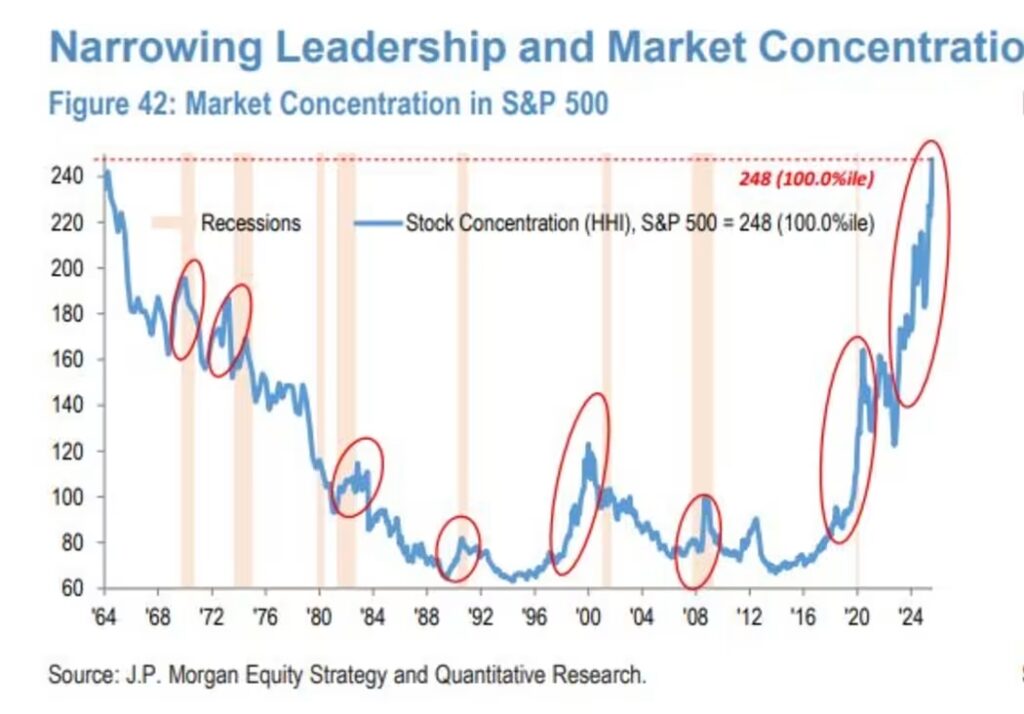
This AI wave has fueled record capital spending, rapid earnings growth, and unprecedented market concentration among AI leaders and quality growth companies—businesses with durable profit margins, strong cash flow, disciplined capital allocation, and low credit risk.
While some analysts worry about stretched valuations, JPMorgan defends the roughly 30x forward earnings multiple for the 30 primary AI stocks, noting their superior pricing power, earnings visibility, and shareholder returns compared to the broader S&P 470, which trades around 19x.
They also expect AI capex to climb 34% next year, with the sector broadening beyond tech into banks, healthcare, logistics, and utilities. A growing “fear of becoming obsolete” is pushing companies and governments to accelerate investment, further fueling momentum.
The strategists remain overweight tech, media, telecom, utilities, and defense, while expecting banks and pharmaceuticals to outperform. They also anticipate rising shareholder payouts and market-friendly fiscal policy, including the proposed One Big Beautiful Bill Act, to attract additional investment.
However, this powerful AI-driven expansion isn’t without drawbacks. The strategists warn that the U.S. is experiencing a K-shaped, winner-takes-all economy, creating sharp sentiment swings and extreme market concentration—conditions similar to 2025’s setup.
Beyond AI, JPMorgan sees opportunities in global strategic resources such as rare earths and uranium, supported by U.S.-China competition, supply-chain diversification, and soaring AI-related energy demand. Meanwhile, deregulation could bolster financials, housing supply chains, and energy, with tariffs and trade-sensitive stocks offering tactical plays.
If JPMorgan is right, 2026 could bring a rare combination of resilient earnings, structural AI tailwinds, and U.S.-led global growth—setting the stage for another defining year in the markets.