Fund Managers’ Year-End Push Could Propel the S&P 500 to 7,000, Says Tom Lee
Could the recent banking jitters mark the start of what some are calling the “Cockroach Crash”? JPMorgan CEO Jamie Dimon’s warning — “when you see one cockroach, there are probably more” — has stirred fresh concern about hidden risks in the financial system. His comment followed the bankruptcies of auto-parts supplier First Brands and subprime lender Tricolor, hinting that trouble in riskier corners of lending may be deeper than expected.
Those worries have rippled through regional banks, with Zions Bancorp tumbling more than 13% and Western Alliance Bancorp down nearly 11% this week after disclosing borrower issues. The anxiety has spread to private equity and the broader financial sector.
Still, there’s no sign of a crash. Even with recent weakness, the S&P 500 is off only about 3% from its record high. For bullish investors, that’s just another buying opportunity in what they see as a continuing uptrend.
That’s exactly the stance of Tom Lee, head of research at Fundstrat, who remains steadfast in his forecast that the S&P 500 will reach 7,000 by year-end.
Lee acknowledges the market’s unease — the Cboe Volatility Index (VIX) recently jumped to 25, its highest since the tariff-driven swings earlier this year. “Investors still remember Silicon Valley Bank in 2023, so the ‘fire, ready, aim’ reaction makes sense,” he said.
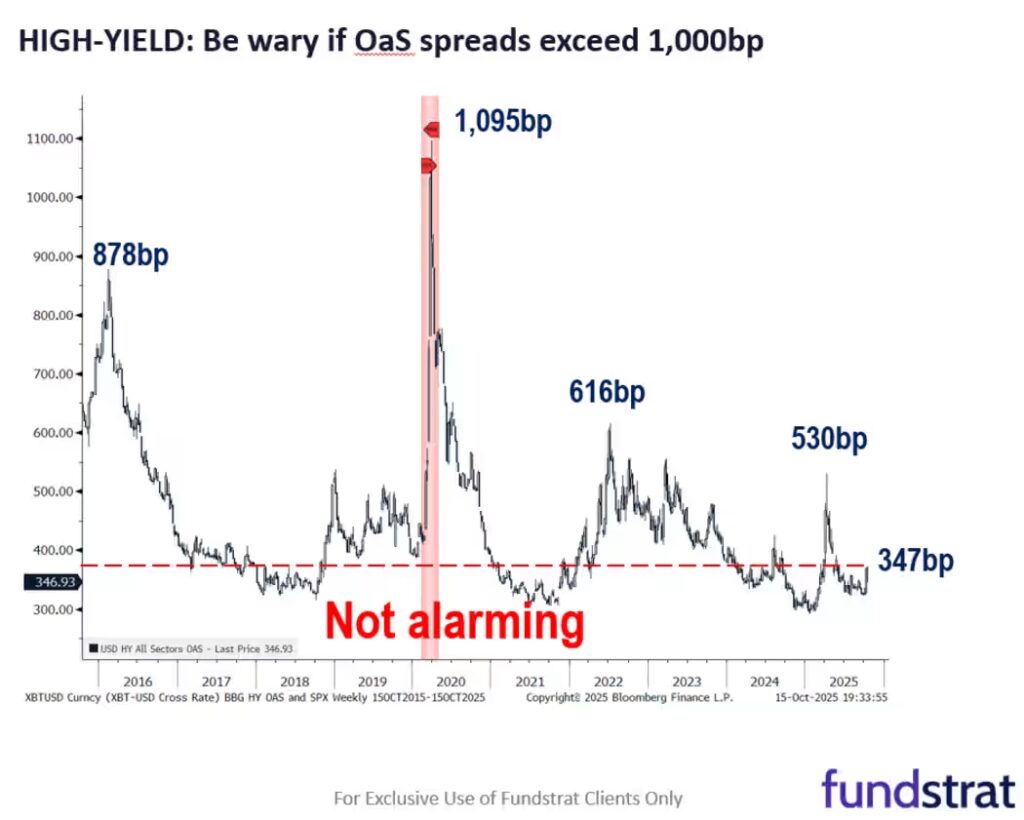
But beneath the surface, Lee finds reasons for optimism. High-yield bond spreads remain contained, suggesting credit conditions aren’t deteriorating dramatically. “That gives me some comfort that fundamentals are not weakening in an adverse way,” he said.
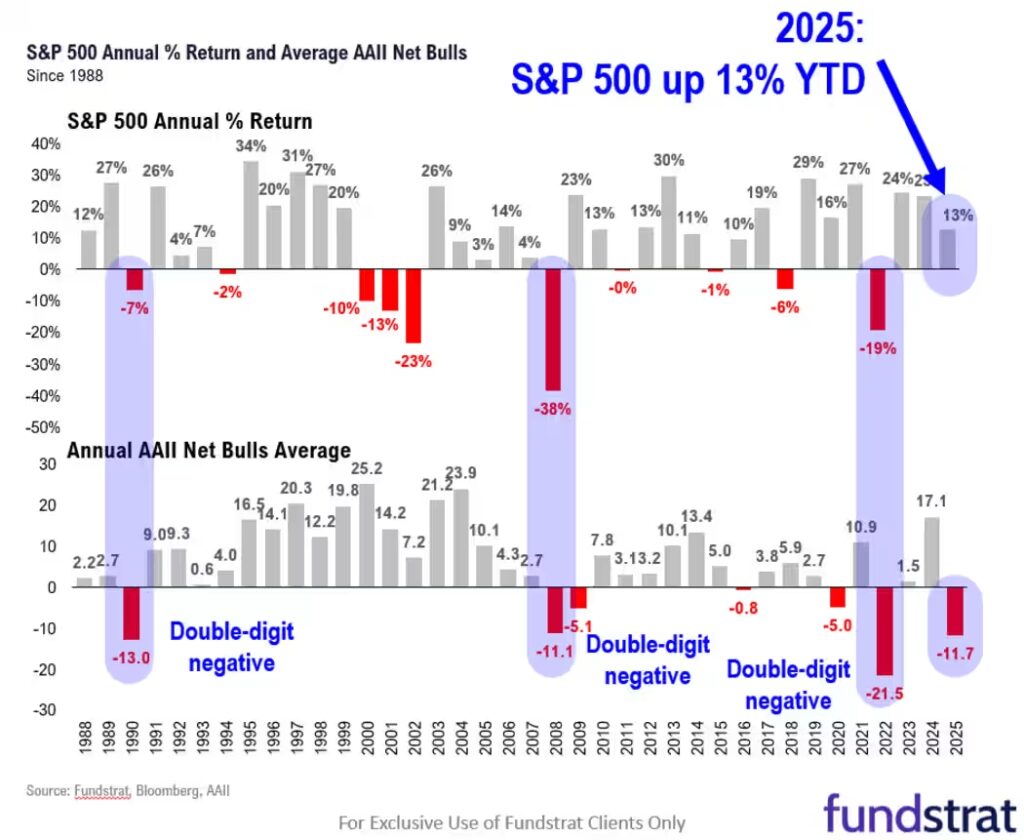
Another positive, according to Lee, is investor sentiment — or rather, the lack of it. The latest AAII survey showed bullish sentiment plunging 12.7 points, signaling widespread caution. “Low conviction is a contrarian positive,” he argues. “If conviction fades easily, it means sentiment isn’t euphoric.”
Lee points out that bearish sentiment often aligns with major down years in stocks, yet in 2025 the S&P 500 has already climbed 13%. “This is the most hated V-shaped rally,” he says.
Strong corporate earnings are also lending support. So far, 82% of companies reporting third-quarter results have beaten expectations by an average of 6.3%, Lee notes.
Finally, Lee expects a year-end performance chase to push stocks higher. “Only 22% of fund managers are beating their benchmarks this year — the weakest showing since before 2000,” he says. “That’s fuel for upside as managers rush to boost returns into year-end.”