Rising Oil Prices Could Cloud Fed’s Inflation Outlook Amid Middle East Turmoil
While market initially shrugged off the escalating Israel-Iran conflict, the situation still poses serious risks for equities—especially through the lens of inflation and sentiment, according to Lori Calvasina, head of U.S. equity strategy at RBC Capital Markets.
Early Monday trading saw S&P 500 futures once again breach the 6,000 level—just 2% shy of February’s record high—despite ongoing missile attacks. But Calvasina warns that the conflict could still deliver a blow to the market through three key channels.
1. Valuation Pressure from Rising Uncertainty
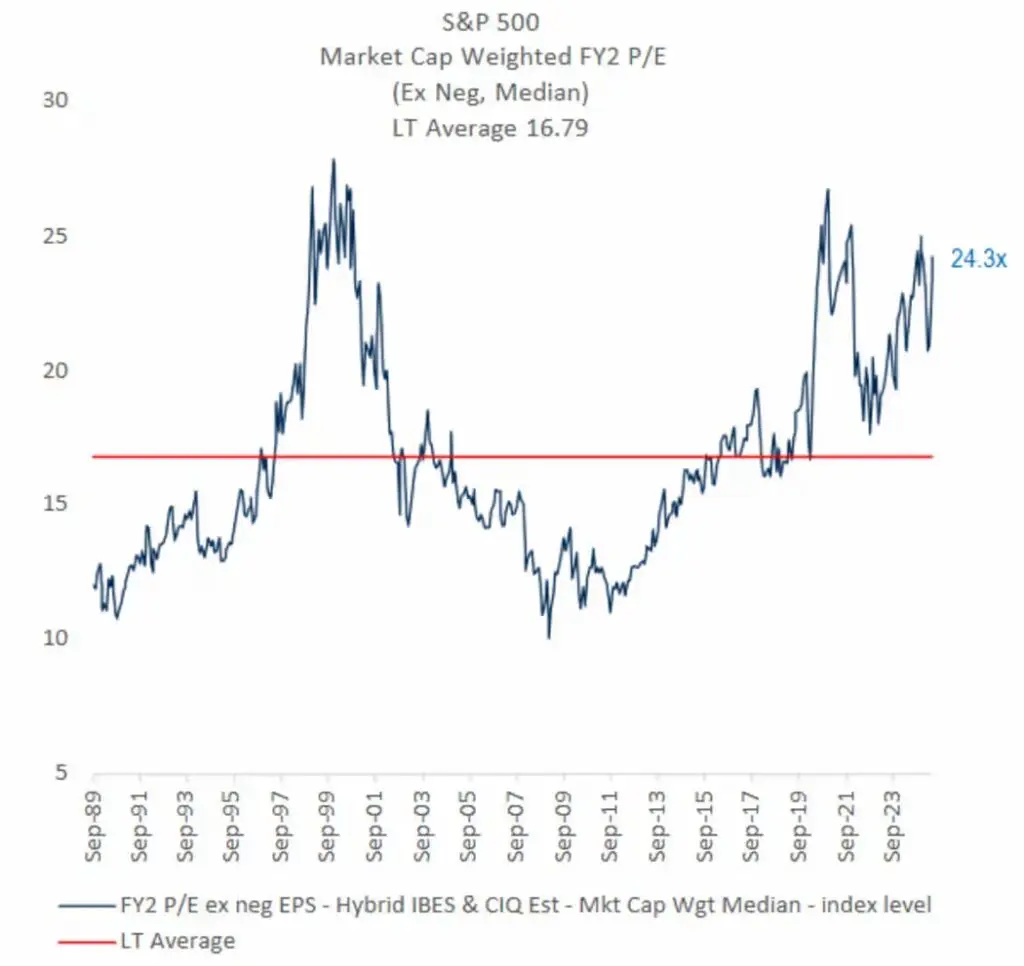
Geopolitical strife tends to drag down investor confidence—and with it, stock valuations. Calvasina notes that just as economic policy uncertainty compresses price-to-earnings (P/E) multiples, heightened national security risks can have a similar effect.
“P/Es for the S&P 500 have tended to contract during times of rising national security uncertainty,” she writes. That’s particularly concerning now, as current valuations didn’t significantly reset even during past volatility episodes, such as the 2018 trade war. Today, P/E multiples remain well above historical averages, leaving stocks more vulnerable to bad news.
2. Sentiment Risks to Market Momentum
Investor optimism—especially around IPOs, M&A, and broader economic outlooks—has played a major role in the recent rally. But Calvasina warns that rising geopolitical tensions could derail that fragile recovery in sentiment.
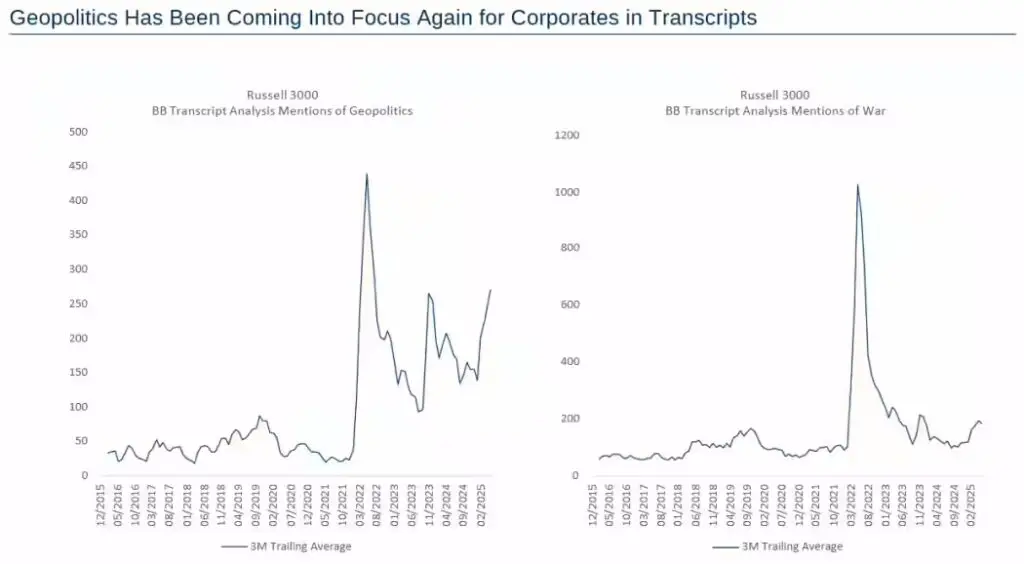
Investor mood has rebounded more strongly than that of consumers or small businesses, she notes, but all are still sensitive to global events. Even unrelated disruptions, like wildfires or severe weather, have historically made their way into corporate earnings calls. Expect the Middle East crisis to become a talking point in upcoming transcripts.
3. Oil Prices Threaten Fed Rate-Cut Hopes
Perhaps the biggest wildcard is oil. A sustained spike in crude prices—especially Brent, the global benchmark—could stoke inflation just as the Fed is weighing potential rate cuts.
RBC’s commodity strategists see room for Brent to climb higher if Middle East supply chains are disrupted. That, in turn, could complicate the Fed’s inflation forecasting and delay or diminish rate cuts that markets have been counting on to support equities.
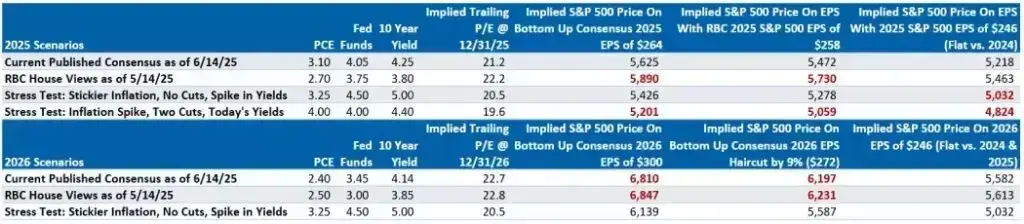
In a recent valuation stress test, RBC modeled a scenario with PCE inflation rising to 4%, just two modest rate cuts in 2025, and 10-year Treasury yields hovering around 4.45%. Under those assumptions, the fair value for the S&P 500 by year-end 2025 drops to the 4,800–5,200 range—well below current levels and revisiting early 2025 lows.
As of Friday’s close, the S&P 500 stood at 5,977. Whether that level holds will depend on how investors digest these mounting crosswinds—from energy prices to geopolitical risk to Fed policy uncertainty.