Markets can often appear confusing at first glance. Charts may show multiple signals pointing in different directions, which can create hesitation or lead traders to take unnecessary risks.
Professional traders understand that the most important skill in trading is knowing when to participate and when to stay out of the market.
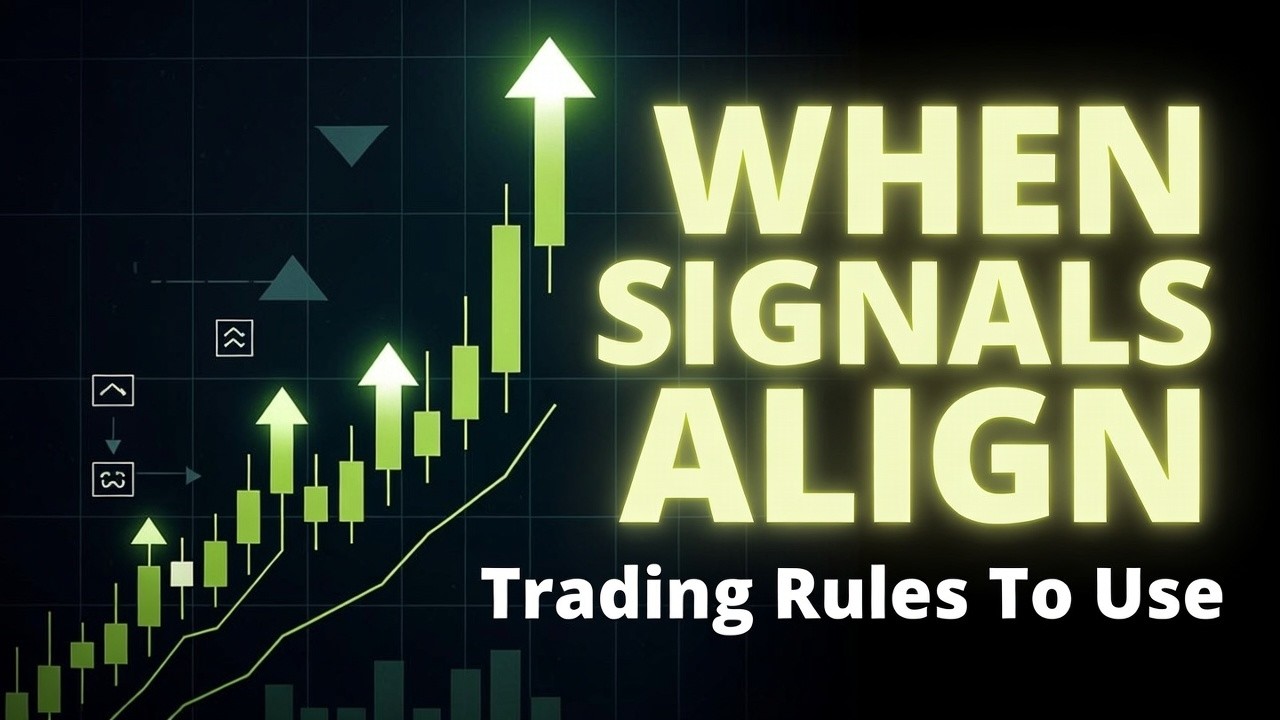
In this lesson, we analyze a real trading example where five long signals appeared in a row, demonstrating how multiple trading methods can align to confirm a strong directional opportunity.

Why Conflicting Signals Should Be Avoided
When analyzing a chart, it’s common to see signals coming from different indicators or methods that contradict one another.
For example:
- One system may generate a long signal
- Another may produce a short signal
- Price action may not yet confirm a clear direction
In situations like this, the best decision a trader can make is often no trade at all.
Trading when signals conflict introduces unnecessary risk because the market has not yet confirmed a clear trend.
Professional traders wait patiently for the market to reveal its direction.
What Happens When Signals Begin to Align
As the market begins to move away from areas of confusion, signals often begin to align.
In the example shown in this lesson, the chart began producing a sequence of long confirmations across multiple trading methods, including:
- Atlas Line long signal
- Trade Scalper long signal
- Sonic long signal
- Additional Trade Scalper confirmations
- Strength confirmations from Atlas Line
This sequence resulted in five long signals appearing consecutively, with each signal occurring higher than the previous one.
This pattern is extremely important.
It indicates that the market is gaining momentum and that buyers are consistently stepping in at higher levels.
The Rule: Each Signal Should Be Higher Than the Previous
One of the simplest ways to interpret signal alignment is to observe the progression of signals on the chart.
When analyzing a sequence like this, traders should look for:
- Multiple signals pointing in the same direction
- Each signal appearing higher than the last
- No opposing signals suggesting weakness
When these conditions are met, the probability of a continuation move increases.
This is exactly the type of setup experienced traders look for.
Trading the Momentum Instead of Fighting It
A common mistake among newer traders is trying to predict reversals too early.
However, when the market is producing consistent signals to the long side, it often means that buyers remain in control of the trend.
Rather than attempting to fight that trend, professional traders focus on trading with the momentum.
In the example discussed in this lesson, every signal confirmed strength to the long side, making the trade decision much clearer.
Example Trade Outcome
During the trade shown in the video, the aligned signals allowed traders to capture a clean momentum move.
Using the Sonic target and stop placement, the position could be managed effectively as the market continued higher.
At one point, the trade had already produced:
- $200 profit
- $300 profit
- Up to $1,000 profit potential for the day
The key takeaway is not the profit amount itself, but rather the clarity of the setup created by aligned signals.
The Importance of Multiple Trading Methods
One of the core concepts behind DayTradeToWin systems is the use of multiple complementary tools to analyze the market.
These include:
- Sonic
- Atlas Line
- Trade Scalper
- Blueprint
- Autopilot
When these systems begin confirming the same directional bias, traders gain additional confidence in the trade structure.
Instead of relying on a single indicator, the strategy focuses on confirmation across multiple trading methods.
When the Market Is Clear, Trading Becomes Easier
Trading becomes significantly simpler when traders avoid unclear conditions and focus only on high-probability setups.
The lesson from this example is straightforward:
- Avoid conflicting signals
- Wait for confirmation
- Trade when multiple signals align
By following these rules, traders can improve consistency and reduce unnecessary losses.
Learn Price Action Trading
DayTradeToWin provides professional trading education and software designed to help traders interpret market structure and price action more effectively.
The platform includes tools such as:
- Sonic
- Atlas Line
- Trade Scalper
- Roadmap
- Autopilot
- Accelerated Mentorship
These tools are available for NinjaTrader and TradingView.
Start learning more about structured price action trading here:
Key Trading Lesson
When multiple trading signals align in the same direction and each signal appears higher than the previous one, it often indicates strong market momentum. Professional traders avoid conflicting signals and instead wait for confirmation across multiple methods before entering a trade.
Frequently Asked Questions About Trading Signals
What does it mean when trading signals align?
When trading signals from multiple methods point in the same direction, it suggests stronger confirmation of a potential trend. This alignment increases the probability of a successful trade.
Why should traders avoid conflicting signals?
Conflicting signals indicate uncertainty in the market. Entering trades during these periods can increase risk because the market has not confirmed a clear direction.
How many signals should confirm a trade?
Professional traders often look for multiple confirmations, such as three or more signals pointing in the same direction, before entering a position.
About the Author
John Paul is the founder of DayTradeToWin, a trading education and software platform established in 2008 that focuses on price-action based futures trading strategies.
DayTradeToWin provides trading education, indicators, and proprietary software designed to help traders identify structured opportunities in the market. John Paul is the creator of several trading methodologies including the Sonic System, Atlas Line, Trade Scalper, Blueprint, and AutoPilot.
These tools are used by traders to analyze price action, identify confirmation signals, and improve trade decision-making in futures markets.
DayTradeToWin software is available for platforms such as NinjaTrader and TradingView and is used by traders worldwide.

John Paul is the founder of DayTradeToWin, a trading education and software platform established in 2008 with thousands of members worldwide. He specializes in price action-based futures trading strategies and structured market analysis.
DayTradeToWin provides trading education, indicators, and software tools designed to help traders apply disciplined, rule-based price action decision-making across global futures markets.
John Paul is the creator of several trading methodologies, including the Sonic System, Atlas Line, and Trade Scalper, used by traders to identify structured opportunities in markets such as the E-mini S&P 500 (ES), Nasdaq (NQ), crude oil (CL), and gold (GC).
Official website: https://daytradetowin.com