By John Paul, DayTradeToWin
What are CME single stock futures?
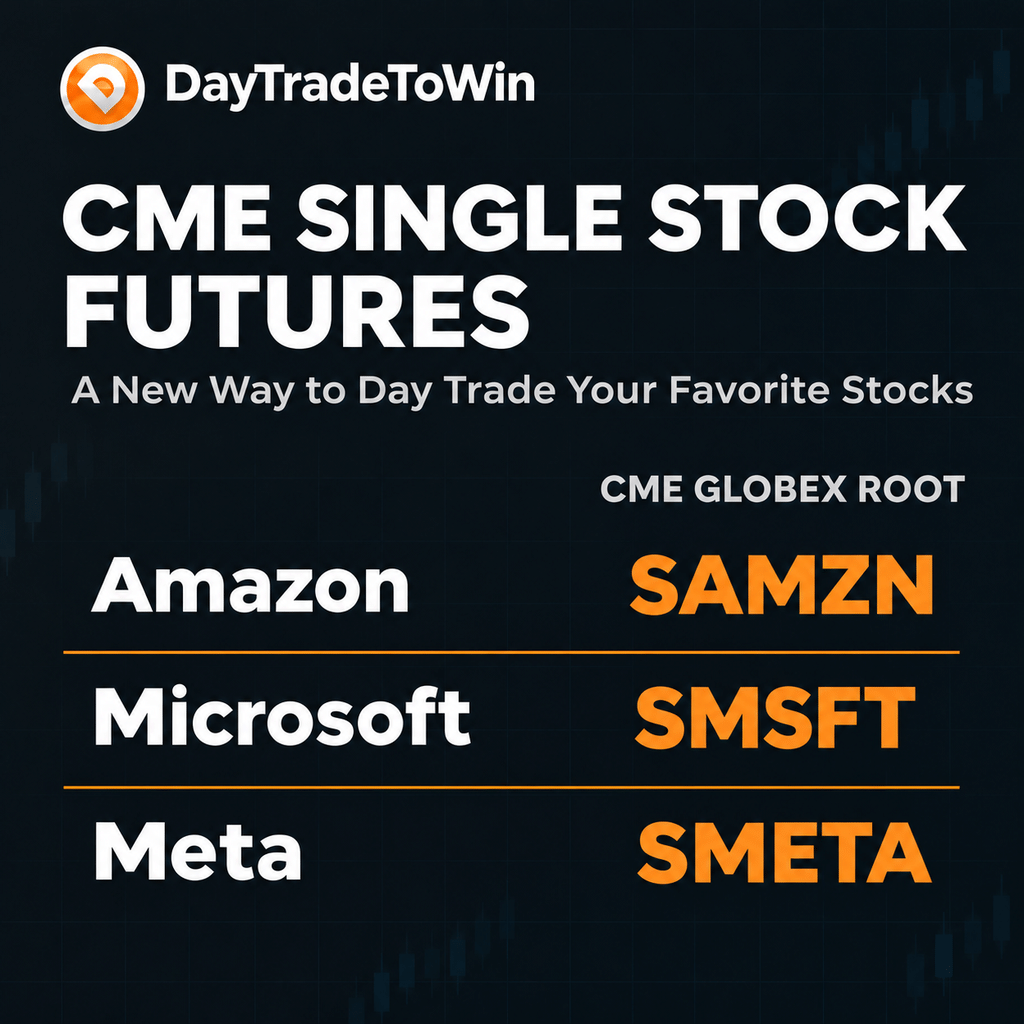
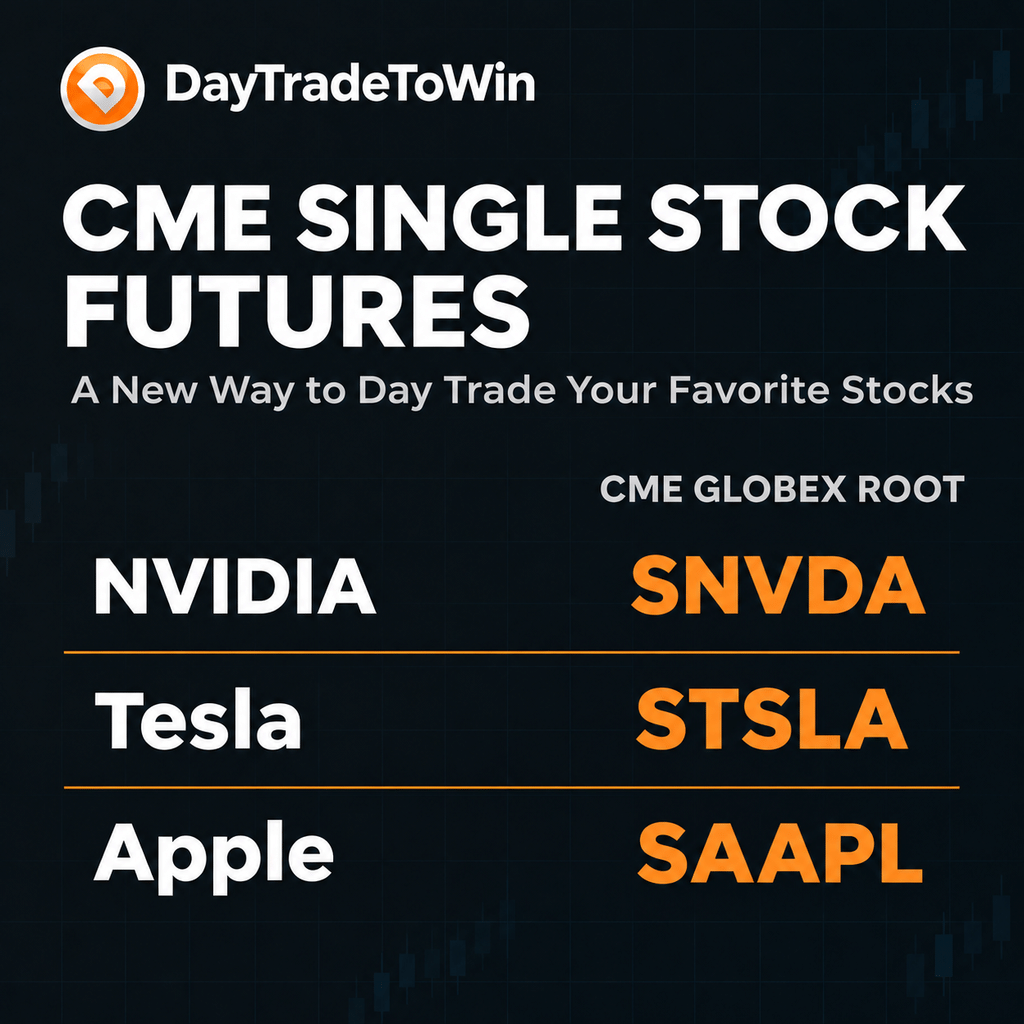
A single stock futures contract is a standardized futures contract tied to the share price of one company. Daytradetowin offers software and trading method specifically used to trade these markets. ES tracks the S&P 500 and NQ tracks the Nasdaq-100. A NVIDIA single stock futures contract gives you exposure to NVIDIA specifically. A company earnings release or guidance update can therefore have an outsized effect on that contract compared with a broad index.
CME’s contracts have an expiration date and settle in cash. At expiration, CME generally uses the underlying stock’s official closing price to determine final settlement. You can take a long or short futures position, and the contract provides price exposure without transferring ownership of the shares. CME Globex generally offers a roughly 23-hour trading day during the trading week, with a daily maintenance break. Check CME’s holiday and expiration schedules for exceptions. See the official CME Group single stock futures page and the CME single stock futures FAQ.
Standard vs. Micro single stock futures
The contract multiplier converts a move on the futures chart into dollars. CME lists Micro versions for selected stocks, so check the product directory for the name you want to study.
| Contract detail | Standard single stock futures | Micro single stock futures |
|---|---|---|
| Share-equivalent multiplier | 100 | 10 |
| Minimum quoted price move | $0.01 | $0.01 |
| Dollar value per tick, per contract | $1.00 | $0.10 |
| Dollar value of a $1.00 futures price move | $100 | $10 |
| Notional value at a $150 futures price | $15,000 | $1,500 |
Suppose you’re testing a setup with a stop $0.40 from the entry. That’s 40 ticks. On one Standard contract, the planned price risk is $40. On one Micro contract, it’s $4. Both figures are before commissions, fees, and slippage. Actual losses can exceed the planned amount if the order fills beyond the stop level. Notional value measures the exposure controlled by the contract. Your broker determines the margin required to hold it. See the CME contract specifications.
How to find single stock futures on TradingView
Open TradingView’s symbol search, select Futures, and look up the CME contract. NVIDIA gives you two concrete examples:
- Standard NVIDIA futures · CME:SNVDA1! on TradingView
- Micro NVIDIA futures · CME:XNVDA1! on TradingView
The charts provide a continuous view. For replay or an execution test, check the actual dated contract, especially around rollover. Use the futures chart when evaluating a futures entry. You can keep the underlying NVDA stock chart beside it for context. A chart that loads in TradingView confirms chart access. Market-data entitlements, available history, and order routing depend on your setup and connected broker.
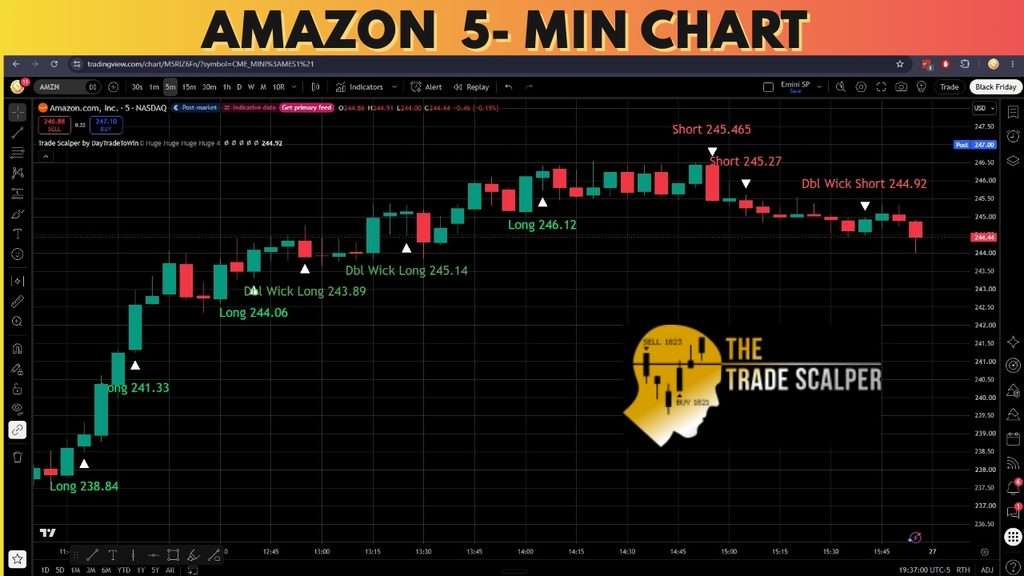
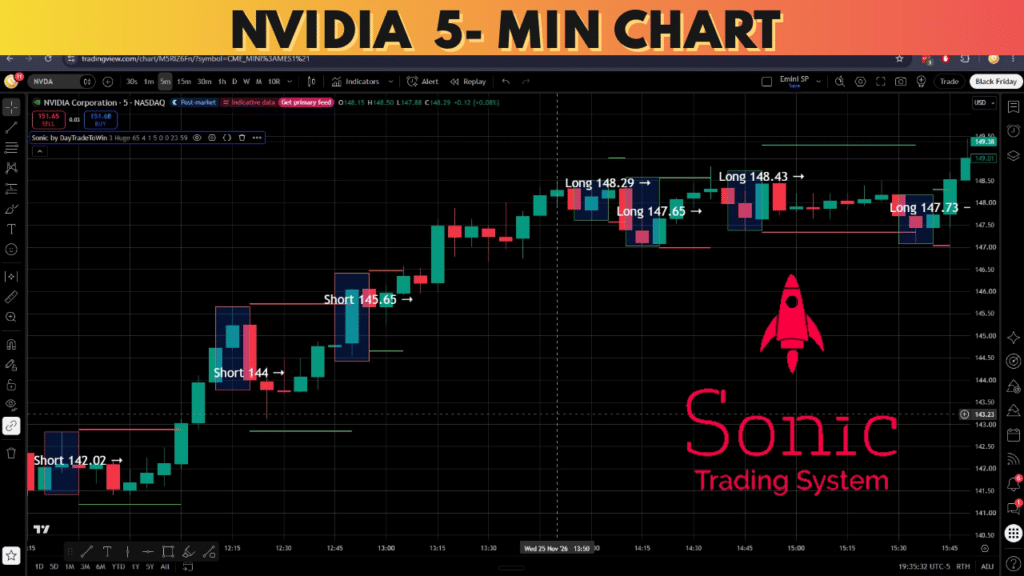
How to find single stock futures on NinjaTrader
NinjaTrader announced that CME Group single stock futures went live for eligible users on July 27, 2026. For a Micro NVIDIA example, NinjaTrader lists XNVDA in its margin directory. Find the instrument and the expiration you want to study, then open its chart and confirm the feed is updating. Check the tick value, your session template, and order access before testing a DayTradeToWin strategy in simulation. Get the current details from NinjaTrader’s single stock futures page and its futures margin directory.
A DayTradeToWin test you can repeat on both platforms
Pick one dated contract, such as Micro NVIDIA, and choose a single morning to review. Open it in TradingView and NinjaTrader. Match the bar interval, time zone, and session settings, then mark the same 9:30 a.m. ET cash open. If bars or signals differ, check your data and session settings before comparing the software.
| What to record | Why it matters |
|---|---|
| Contract, expiration, date, time zone, and chart interval | Another trader can open the same instrument and review the same setup. |
| Entry signal, intended entry and exit prices, and bid–ask spread | You can tell how much of the expected move the quoted spread would consume. |
| Simulated fill, commissions, and price difference from the planned entry | You can see whether the result depends on a fill the market may have made difficult. |
| Earnings or other company news, and whether your rules allowed a trade | You can compare ordinary sessions with sessions driven by company events. |
For a hypothetical example, a $0.04 bid–ask spread is 10% of a $0.40 target distance before commissions or additional slippage. On one Micro NVIDIA contract, that is a $0.40 quoted spread versus a $4.00 gross target. The spread is a snapshot. The cost of an actual trade depends on how the orders fill.
How to test DayTradeToWin methods on single stock futures
I’d start with the same questions I ask on an index futures chart. What’s the direction? Where can I enter under my rules? Where is the setup invalidated? Then I’d see how those rules behave on the new contract.
Sonic System for discretionary price action
Choose one contract and one trading window. Suppose you’re studying Micro NVIDIA futures during the U.S. cash session. Mark the early high and low, then watch how a Sonic setup develops near those levels. Record where the signal appeared, how wide the spread was, and what a realistic entry and exit would have looked like.
Review similar setups across several sessions, including quiet days and days when NVDA is moving on news. If the spread and expected slippage take up a large share of the move you’re trying to capture, the setup may be a poor fit for that contract or session. Explore the DayTradeToWin Sonic System.
AutoPilot+ for automated strategy testing
If you use AutoPilot+, make the first run a simulation on a specific contract and expiration. Verify that your installed version can load the symbol and read its prices correctly. Then test the session hours, quantity, stop and target behavior, and daily profit and loss limits. Watch what happens when a limit is reached and another qualifying setup appears.
I’d set up the test using the new contract’s dollar value and price behavior. A stop expressed in ticks can produce very different dollar exposure across ES, NQ, and a single stock future. Review actual simulated orders and fills to see whether the controls behave as configured. Explore the DayTradeToWin AutoPilot+ system.
Direction, pullbacks, and the 9:30 a.m. ET open
If you follow DayTradeToWin methods such as Atlas Line®, Trade Scalper®, or At The Open, you can use the ideas behind each method to frame what you want to study. For directional analysis, compare signals above and below your reference level. For a pullback or scalping setup, measure the spread against your expected target. For an opening setup, explicitly test the 9:30 a.m. Eastern U.S. stock market open and make sure your chart uses the session you intended. CME futures begin their trading session earlier, which can affect how a session-based tool calculates levels.
What I’d check before trading a single stock future live
- Choose the contract you intend to trade. Compare the Standard and Micro versions on spread, volume, and available depth at the time you’d actually enter.
- Convert ticks to dollars. Write down the tick value, typical stop distance, and expected cost per round trip. Include commissions and realistic slippage in the review.
- Mark earnings and other company events. Record whether the trade occurred in a normal session or near a company announcement. Compare those results separately.
- Test the exact platform setup. Verify the market data, dated contract, chart session, and DayTradeToWin version you plan to use. If automating, confirm order routing in the intended account and observe how the strategy handles exits and daily limits in simulation.
- Review fills before judging the signal. Keep a record of entry price, exit price, spread, slippage, and the reason for the trade. A chart setup can look clean even when real execution is harder.
One useful first experiment is to review the same morning window on ES or NQ and on a single stock future. Ask whether the stock-specific contract gave you a clear setup and whether there was enough liquidity to execute it at the prices your rules assumed.
CME single stock futures let you trade the price movement of one company through a futures contract. For NVIDIA, look up CME:SNVDA1! (Standard) or or CME:XNVDA1! (Micro) in TradingView.
On NinjaTrader, XNVDA is the Micro NVIDIA product code. A one-cent move is worth $1.00 per Standard contract or $0.10 per Micro contract. Your market-data subscription and brokerage setup determine which quotes and live order features you can use. CME contract FAQ · TradingView Micro NVIDIA chart · NinjaTrader margin directory.
If you already trade ES or NQ, the question I’d ask is whether the same entry and exit rules are practical on a contract tied to one company. Below is the DayTradeToWin process I’d use to test Sonic or AutoPilot+ on a CME single stock future. I’d start by matching the contract and chart session on both platforms, then look at whether the spread and realistic fills leave enough room for the setup.
A single stock futures contract is a standardized futures contract tied to the share price of one company. ES tracks the S&P 500 and NQ tracks the Nasdaq-100. A NVIDIA single stock futures contract gives you exposure to NVIDIA specifically. A company earnings release or guidance update can therefore have an outsized effect on that contract compared with a broad index.
CME’s contracts have an expiration date and settle in cash. At expiration, CME generally uses the underlying stock’s official closing price to determine final settlement. You can take a long or short futures position, and the contract provides price exposure without transferring ownership of the shares. CME Globex generally offers a roughly 23-hour trading day during the trading week, with a daily maintenance break. Check CME’s holiday and expiration schedules for exceptions. See the official CME Group single stock futures page and the CME single stock futures FAQ.
Frequently asked questions
What is the difference between a stock and a single stock futures contract?
Buying stock gives you shares in a company. A CME single stock futures contract provides price exposure through a leveraged, time-limited agreement tied to that company. The CME contracts settle in cash at expiration. See the CME product FAQ.
Can I chart CME single stock futures on TradingView?
Yes. TradingView lists CME symbols such as NVIDIA’s SNVDA1! and Micro NVIDIA’s XNVDA1!. For a live trading setup, check whether your broker supports the specific dated contract and whether you have the data access you need. See the TradingView Micro NVIDIA futures chart.
Can I trade single stock futures on NinjaTrader?
NinjaTrader offers CME single stock futures for eligible users. Confirm that your account can trade the specific contract and check the broker’s current margin requirements and session restrictions. See NinjaTrader’s product announcement.
How much is one tick worth on Micro single stock futures?
One $0.01 tick is worth $0.10 per Micro contract. The same tick is worth $1.00 per Standard contract. A $1.00 futures price move is therefore worth $10 per Micro or $100 per Standard, before trading costs. See the CME contract FAQ.
Can I use my ES or NQ settings on single stock futures?
Use the same price action principles as a starting point and test your settings for the specific contract. Tick value, active trading hours, spread, and company news all matter. If you use Sonic or AutoPilot+, verify the installed version, the symbol, and the order behavior in your platform before trading live.
About DayTradeToWin
John Paul runs DayTradeToWin, which provides price action trading education and software for TradingView and NinjaTrader. Explore the Sonic System for discretionary setups or AutoPilot+ for automated strategy testing.
Risk disclosure
This article is for educational purposes and does not provide personalized investment advice. Futures trading involves substantial risk and is unsuitable for some traders. Leverage can magnify losses, and losses can exceed your initial deposit. Simulated examples may differ from live results due to liquidity, slippage, fees, and order execution. Past performance does not guarantee future results.
Affiliate Disclosure: This website contains affiliate links. When you click on a link and make a purchase, We may receive a commission for advertising the product (at no extra cost to you).

John Paul is the founder of DayTradeToWin, a trading education and software platform established in 2008 with thousands of members worldwide. He specializes in price action-based futures trading strategies and structured market analysis.
DayTradeToWin provides trading education, indicators, and software tools designed to help traders apply disciplined, rule-based price action decision-making across global futures markets.
John Paul is the creator of several trading methodologies, including the Sonic System, Atlas Line, and Trade Scalper, used by traders to identify structured opportunities in markets such as the E-mini S&P 500 (ES), Nasdaq (NQ), crude oil (CL), and gold (GC).
Official website: https://daytradetowin.com