Kevin Muir Warns: Vol-Control Funds May Be Nearing Their Buying Limit, Market Vulnerable
The powerful, V-shaped stock market rebound this year has thrilled some investors—but made others uneasy. Is the rally too fast, too soon? Or just the beginning of another leg higher?
Macro strategist and author of The Macro Tourist blog, Kevin Muir, is leaning toward caution. In a recent interview with MarketWatch, Muir expressed growing concern about what he sees as a waning force behind the market’s recent strength: volatility control funds—also known as “vol control” strategies.
“These are under-the-radar strategies used by large institutions like pensions and endowments,” said Muir. “They quietly adjust exposure based on market volatility—buying more when markets are calm and scaling back when things get choppy.”
Muir has tracked these funds closely for years. He believes much of the recent market rally has been driven by vol-control buying after earlier forced selling during a spike in volatility—particularly around what he dubbed the “Liberation Day” event.
“They’ve been re-entering the market, but that buying is starting to run out of steam,” Muir said. “I’ve been patiently waiting, and yesterday was the first day I stepped back and said, ‘It’s time to be cautious again.’”
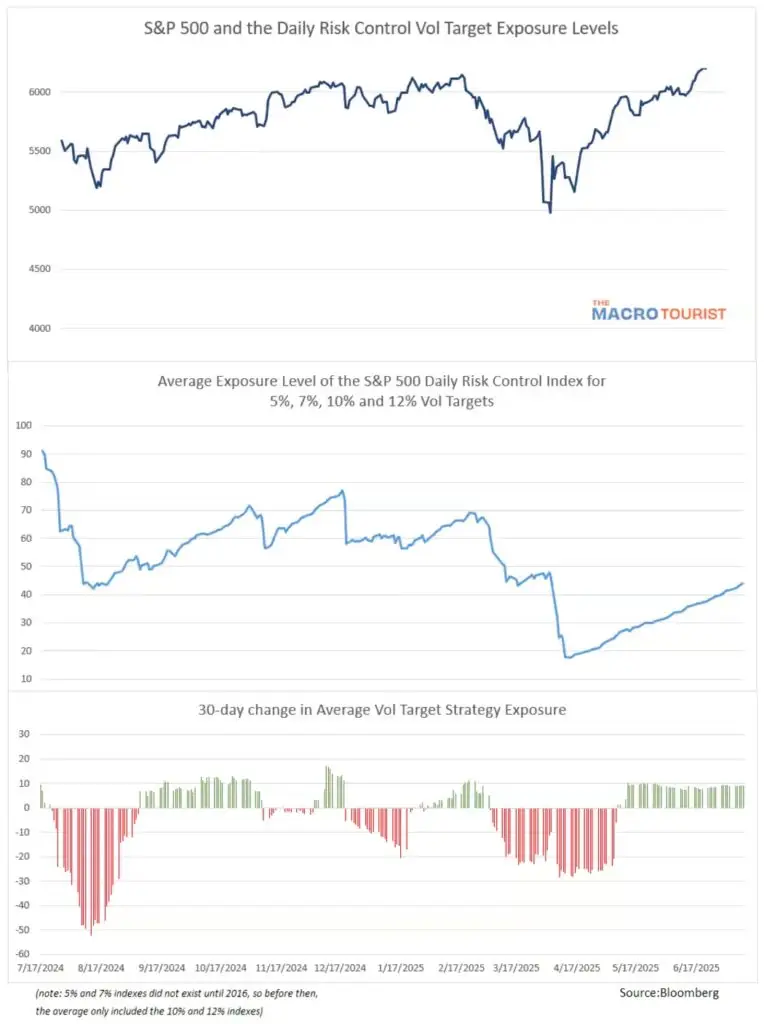
Muir estimates that these strategies control between $300 billion to $500 billion in assets, making them powerful market movers. “On days when markets drift higher without news, I believe it’s often these funds quietly buying,” he added.
But now, Muir thinks their impact may be fading—and that could leave markets more exposed.
Even more concerning, he says, is the relentless retail buying. “Retail has just kept piling in. And while they’ve made money, it feels eerily similar to the peaks of 1999 or 2021. There’s this sense of buying the most at the top.”
His broader concern? The U.S. stock market is now “the most expensive, most concentrated, and over-owned asset out there,” made even riskier by growing economic and policy uncertainty. “We’ve seen what happens when markets get this lopsided—1929, 2000—these are cautionary tales,” Muir said.
His advice to investors: Start reducing risk exposure to U.S. equities and look for diversification opportunities. He believes the tailwinds of vol-control buying and seasonal strength may be fading—and the time to fade the rally may be near.
“I’m not saying we crash tomorrow,” Muir said. “But the forces that have been propping up this rally are starting to exhaust themselves. I’m back in caution mode.”