Markets Tend to Shrug Off Geopolitical Shocks Quickly, IMF Finds
Markets were rattled after Israel bombed Iran and Iran reportedly responded with drones, but signs of investor nerves may already be fading. S&P 500 futures pared losses, oil prices halved earlier gains, and gold retreated from session highs.
This rapid rebound isn’t unusual. According to Michael Brown, senior strategist at Pepperstone, “Markets are quick to price in geopolitical fear — and just as quick to move on.”
An April IMF report backs this up. Researchers found that while geopolitical shocks initially weigh on markets, the impact is often short-lived — unless the event is a major military conflict.
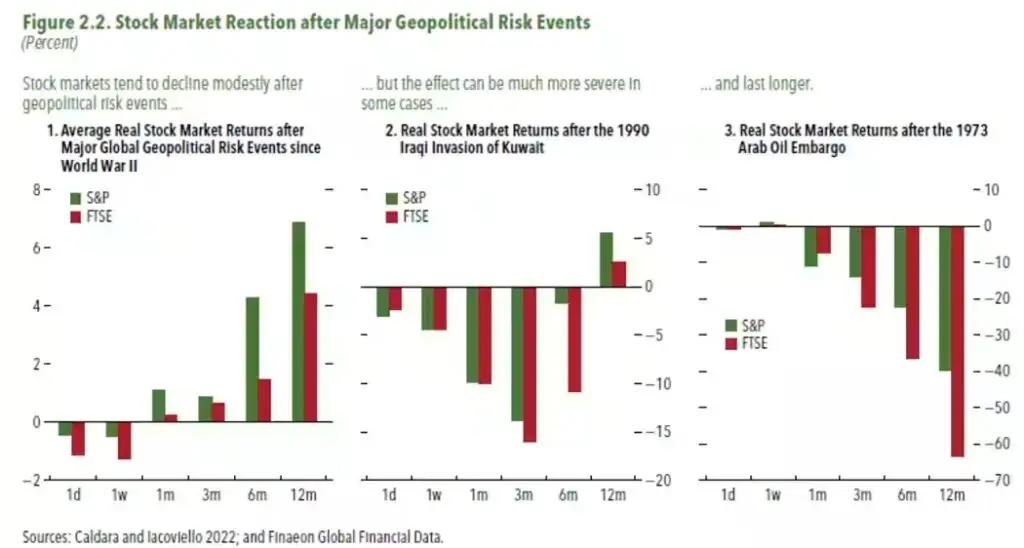
“Stock prices generally react modestly to geopolitical risks,” the report says. But wars tend to hit harder, especially in emerging markets. Military conflicts caused emerging market stocks to drop an average of 5% monthly — double the hit from other risk events.
Still, markets tend to recover. On average, global stocks bounce back within a month after major geopolitical shocks. But the recovery varies by region, sector, and the nature of the conflict.
For example, commodity prices may rise from supply disruptions, boosting energy stocks but hurting sectors reliant on fuel. Prolonged oil supply fears — like during the 1973 embargo or Iraq’s invasion of Kuwait — can lead to deeper, longer market slumps.
A Deutsche Bank study showed that recent geopolitical shocks typically trigger sharp but short-lived selloffs. “After the initial fear fades, fundamentals take over,” says strategist Jim Reid.
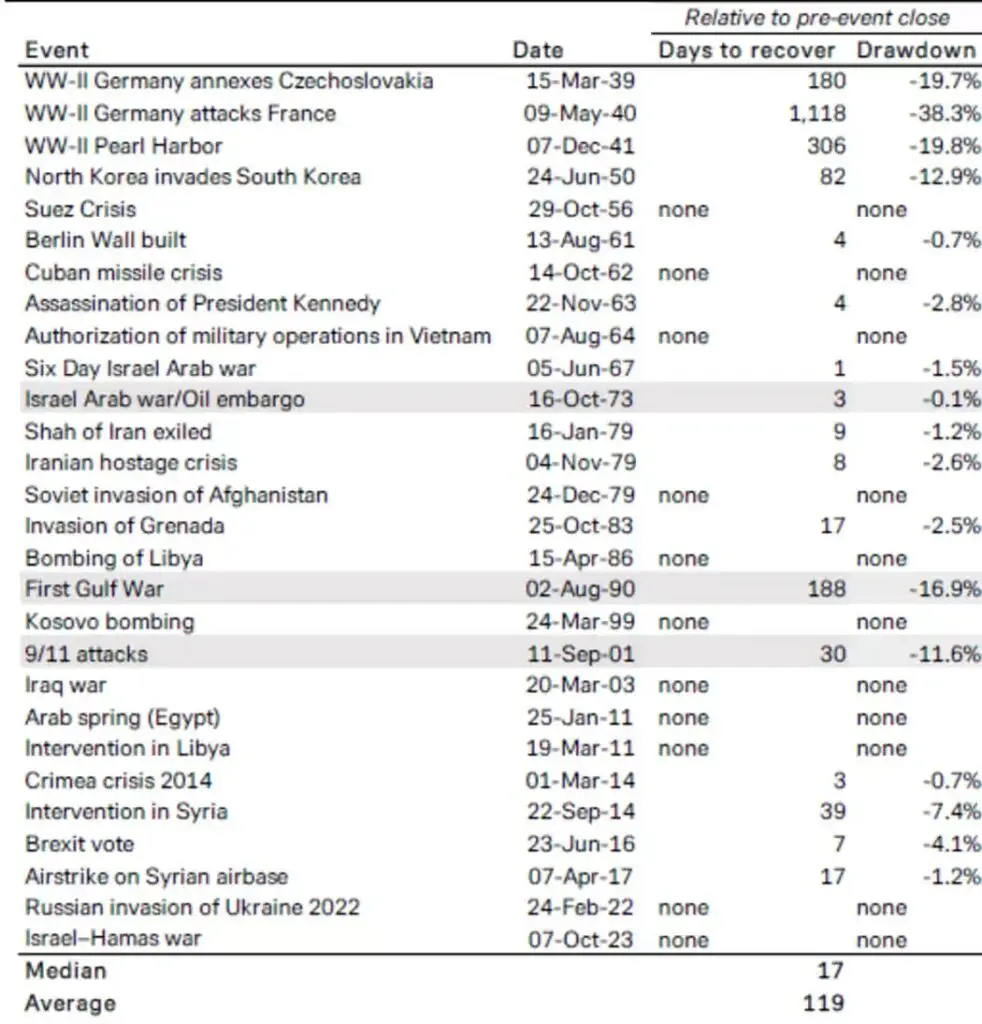
Their conclusion? “You should generally buy into geopolitical risk.” But with global tensions rising, that old pattern may be tested.