AI Revival and $1 Trillion in Buybacks Poised to Boost Stock Market
The S&P 500 managed to close just above the 6,000 mark last week—barely, but enough to keep bullish momentum alive. Another 2.4% climb would push the index back into record territory.
That rally, a 20.4% surge since mid-April, is causing a notable shift in analyst sentiment. After slashing their 2025 forecasts just weeks ago, many are now raising their targets once again.
Citigroup’s Scott Chronert and his team are the latest to revise their outlook upward. Once forecasting a 6,500 target for the S&P 500 by the end of 2025, they had cut that to 5,800 due to concerns over trade tensions. Now, they’re settling on 6,300—a 5% upside from current levels—acknowledging potential policy shocks but assuming the worst of the tariff worries are behind us.
“Investors are likely to look past short-term policy noise,” Citi notes, pointing to improving GDP growth forecasts and a stabilizing labor market outlook for next year.
That slightly brighter economic picture is prompting Citi to lift its full-year S&P 500 earnings estimate to $261 per share, up from $255. While that’s still short of the $270 they had expected earlier this year, the improved sentiment helps justify a price-to-earnings multiple of 21, especially with companies adapting to policy uncertainty.
Citi also sees long-term support for higher valuations, citing advances in technology—especially AI—as a force that could reduce earnings volatility through economic cycles.
Two key forces underpin this optimism:
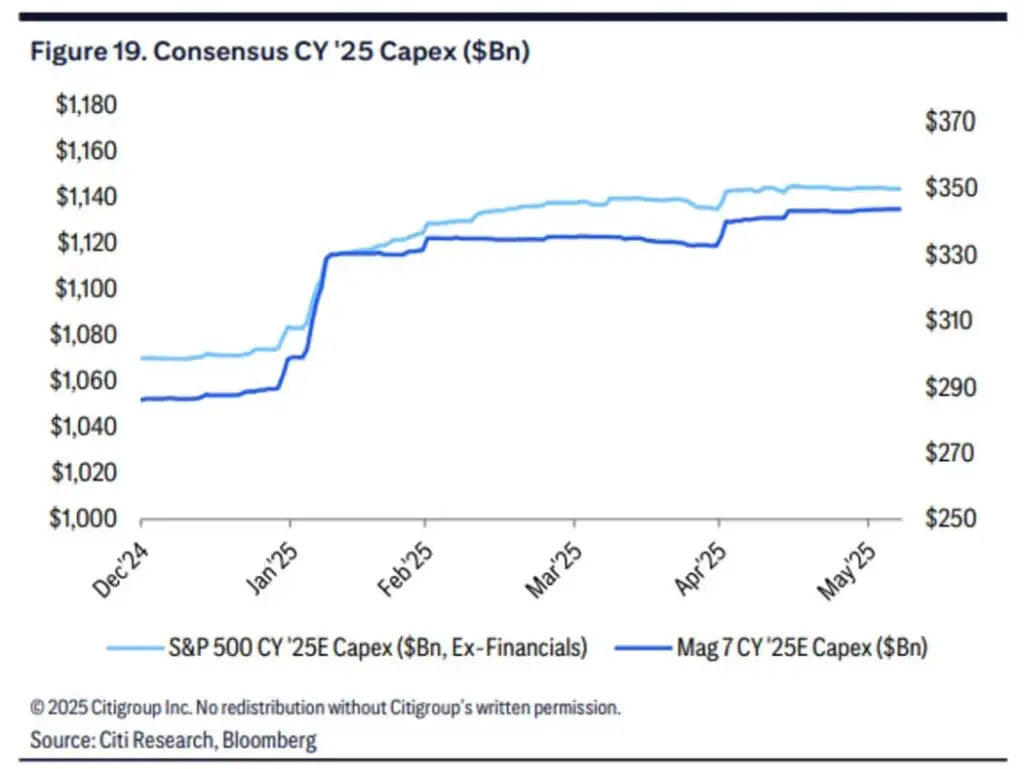
- AI Momentum: Citi believes the AI trade is picking up steam again, driving strong capital expenditures. “Capex intentions have remained resilient despite policy uncertainty,” they write, signaling confidence in structural growth.
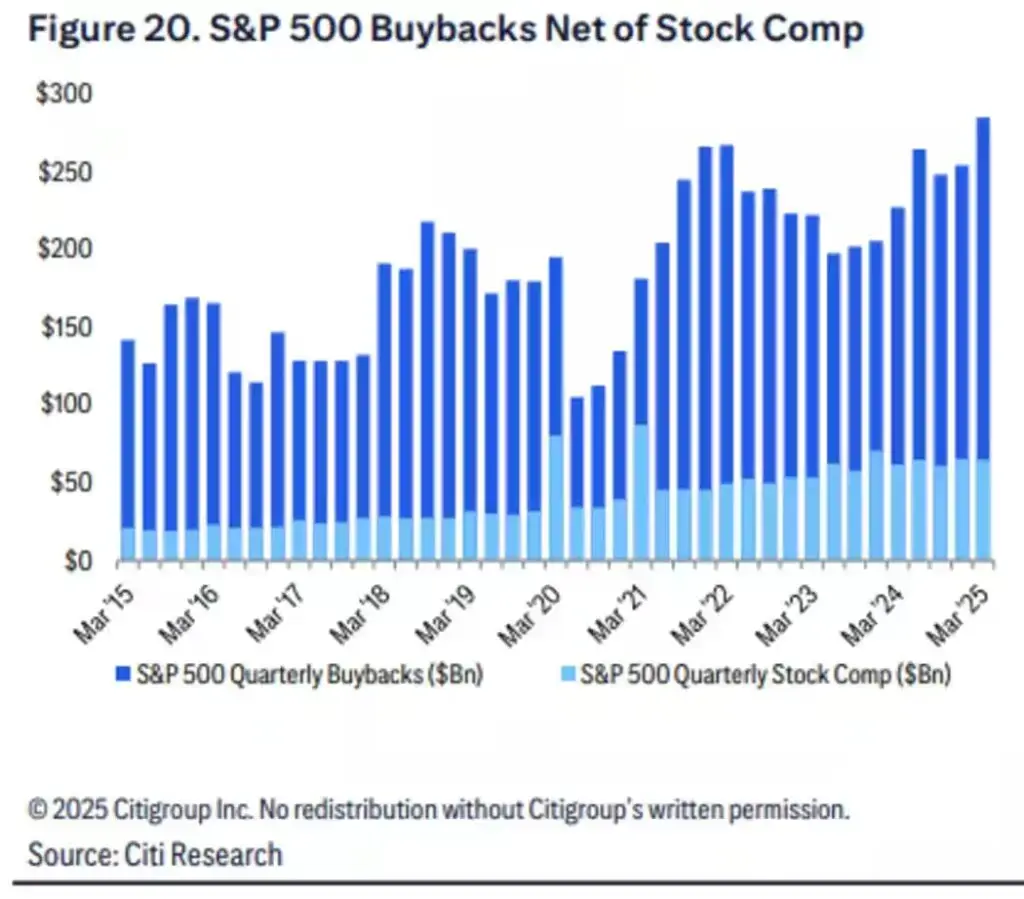
- Buybacks: Citi estimates corporate buybacks could total $1 trillion in 2025. This trend aligns with their earlier forecast that policy-driven market volatility would prompt companies to return more capital to shareholders.
Citi frames their forecast revisions as a response to the “volatility path” created by ongoing policy uncertainty, particularly tied to the Trump administration. But they note that markets are growing more accustomed to this environment.
“With experience, we’re confident that fundamental volatility will prove more manageable than policy volatility,” they say.
Looking ahead, Citi expects mid-single-digit gains in the second half of 2025. They maintain a mid-2026 S&P 500 target of 6,500, suggesting investors focus more on buying dips than chasing rallies.