Despite Rising Yields, Goldman Sachs Stands by 6,500 S&P 500 Target
Despite a recent surge in bond yields, Goldman Sachs is holding firm on its 12-month S&P 500 target of 6,500.
Yields on the U.S. 10-year Treasury note have climbed from around 4% at the end of April to approximately 4.43%, driven by concerns over the inflationary impact of tariffs and rising term premia—where investors demand higher compensation for holding longer-dated bonds. In a note released late Friday, Goldman strategists led by David Kostin examined how these dynamics could affect equity markets.
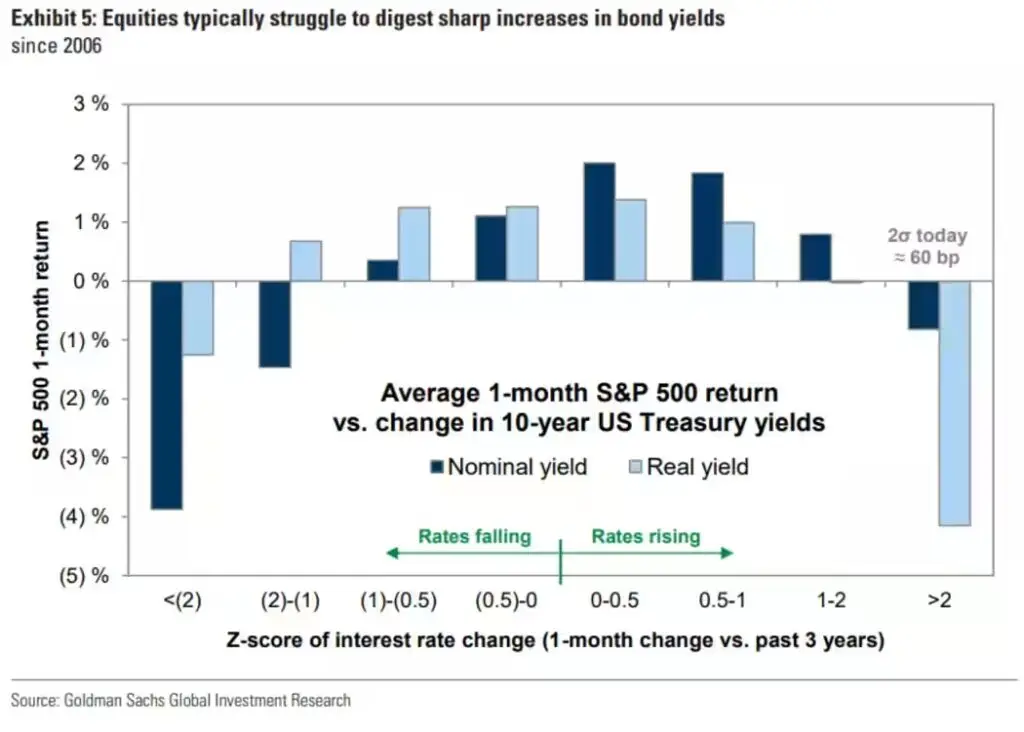
Goldman projects the 10-year Treasury yield will end 2025 at about 4.5%, with a slight increase to 4.55% in 2026. The team emphasizes that what matters most for equities isn’t the level of interest rates per se, but rather the underlying drivers and the pace of change.
According to Kostin, equity markets are more tolerant of rising yields when they stem from stronger economic growth. However, yields driven by inflation fears or fiscal concerns are more problematic. Markets are also better able to digest a gradual increase in yields. In contrast, a sharp spike—such as a two standard deviation jump within a month—could trigger a market correction.
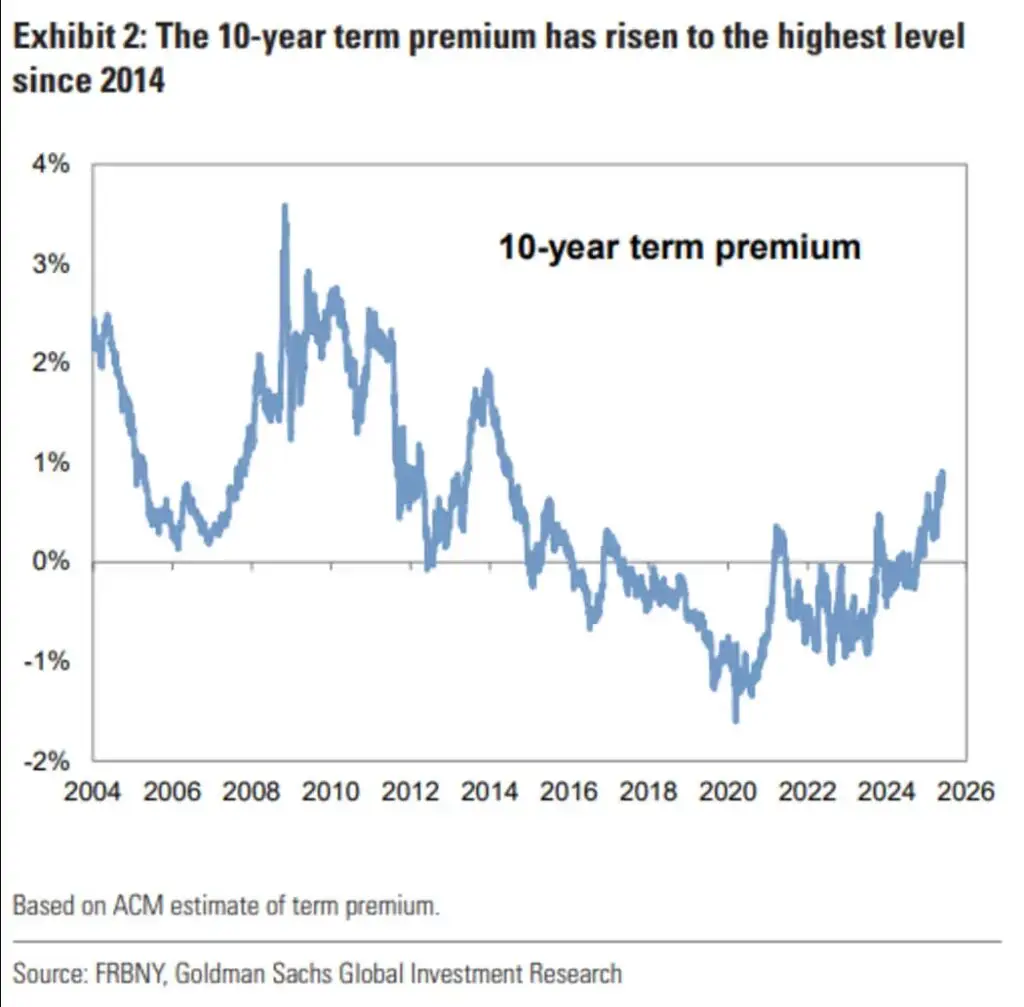
Goldman also noted that since the tariff tensions intensified on April 2, clients have shown heightened interest in the link between bond yields and stock performance—even though, as they point out, the historical relationship remains unclear.
The strategists expect the S&P 500’s 12-month forward price-to-earnings ratio, currently close to fair value, to remain steady over the coming year. One reason is that many S&P 500 constituents are financed with long-term, fixed-rate debt, making them less exposed to bond market volatility.
In contrast, small-cap stocks—which often rely on shorter-term, floating-rate debt—are more vulnerable to rising yields. As a result, Goldman reiterates its recommendation for investors to focus on companies with strong balance sheets in their portfolios.