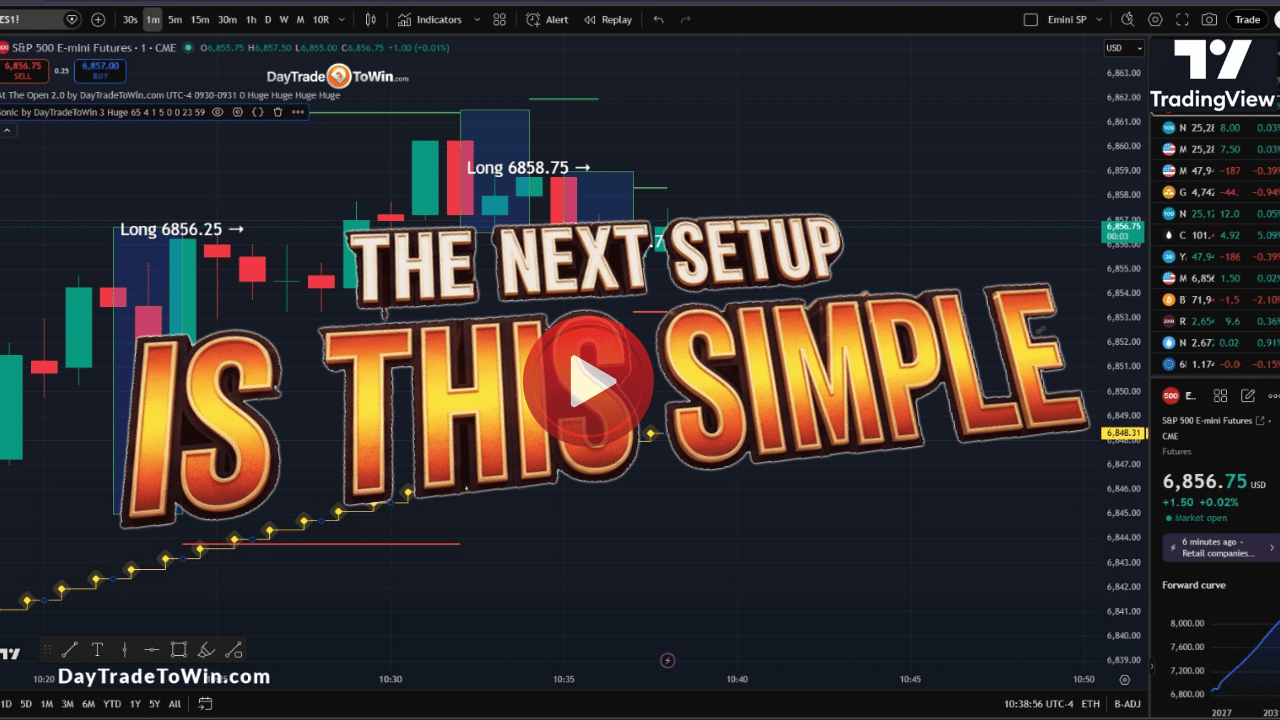
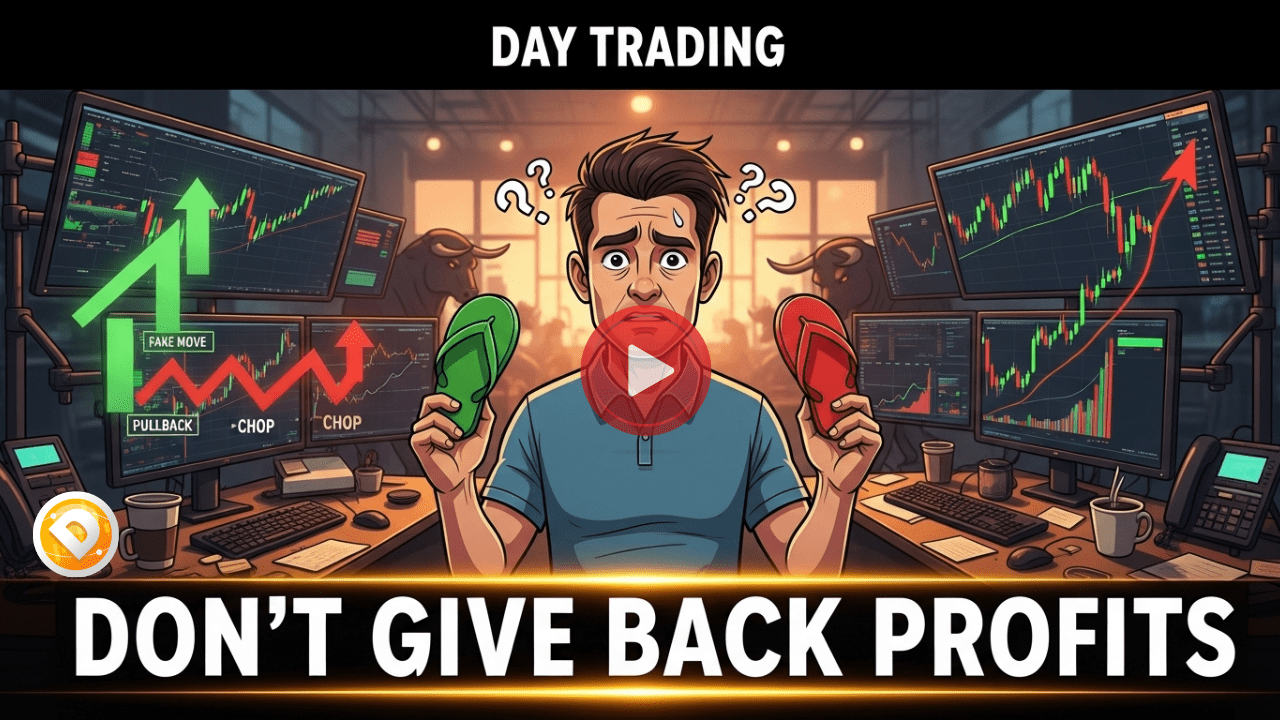
On January 23, 2013 trading the E-mini S&P 500, the Atlas Line produced a successful Long trade at 1488. This first trade was good for one point according to the market’s ATR (Average True Range). Profit targets are always based on the ATR. This type of dynamic stop reduces risk and makes your profit target match was the market is expected to be able to produce. John Paul has his “BarsBack” Atlas Line parameter set quite high, so you see the entry signals a few bars to the left of the entry candle / signal. You can see how this setting applies with the Short trade at 1486.50. This video shows the trade occurring live, with a profit target of 1.25 points. The best time to trade the Atlas Line is the morning (US/Eastern), but you can trade it on nearly and market that trades 24 hours a day with reasonable volatility. Trading is simple and objective when you have your profit targets and stops known in advance.
1. Have an entry and exit plan Knowing when to get in, when to get out, and what to do if the trade fails is extremely important. In other words, have an entry strategy, profit target and stop loss.
2. Avoid the first 15 minutes when a market opens This period of time is usually highly volatile – automated systems, premarket trades and unfounded trades produce choppy price action. You are better off waiting until it levels out and using the ATO (At the Open) Strategy taught in the Mentorship Program.
3. Understand market orders vs. limit orders Market orders tell your broker to buy or sell at the best available price. Limit orders let you control the maximum and minimum prices at which you will buy and sell. Limit orders are better because you have more control and can be used more easily with strategies.
4. Avoid margin risk The whole point of trading using a margin is to increase the amount of potential returns on each trade. Leveraging more money puts you at risk so keep your margins in check. Trade with a 4:1 intraday margin, if possible.
5. Don’t guess or follow instincts Always have a strategy. You need to know objectively what conditions will trigger your entry. And these conditions have to be consistently successful.
6. Keep a log of your trading activity Your trading software can keep track of your profit and loss performance. You should keep track of your personal development as a trader – improve upon your mistakes. The paper remembers better than the mind.
7. Paper / sim trade first Practice makes perfect. Paper trading with a live data feed will simulate the experience of live trading as closely as possible without spending real money. Paper trade for as long as you need to before going live.
8. Be wary of where your trading advice comes from The markets are inherently unpredictable for the most part. In the business of trading, there are many who are a little too confident. Do your research before putting anyone’s advice to the test.
9. Control your losses When trading with real funds, only trade with money you can afford to lose. If trading ever gets you into financial trouble, take a break and refine your strategy by paper trading with live data.
10. Allow yourself enough time to learn A baby needs to crawl before being able to walk. Don’t panic at the first hint of loss and throw your strategies out the window. Trading is emotional. Know that you will have losing trades. Being consistent requires discipline with the right, objective trading methods. See our courses to find out more.
Live Questions and Answers for Advanced Trading Techniques and Market Analytics with NinjaTrader 7
As an active trader, the trading tools you select will have a dramatic impact on your success. Whether you trade futures, forex, or equities, you can significantly enhance your trading efficiency by utilizing proven techniques used by successful day traders.
Attend this event to learn how to incorporate these techniques for an immediate benefit to your trading!
• Maximize profit potential by trading directly off your chart using automatic trailing stops and profit targets
• Be ready on every FOMC day with a Breakout strategy to effectively trade news events
• Learn how to go both long and short on the same instrument in the same account using NinjaTrader’s powerful Strategy Selection Mode.
• Explore NinjaTrader’s extensive list of free indicators including custom made indicators available on the NinjaTrader Support Forum
• Added Bonus! Learn to fine tune your trading strategies by recording the day’s action and replay at your convenience, 24 hours a day, 7 days a week!
Wesley Sinks from NinjaTrader will be presenting. Bring all of your detailed, NinjaTrader-specific questions to hear from an expert. Interested in purchasing a NinjaTrader license for live trading? Attend this webinar for potential NinjaTrader savings.
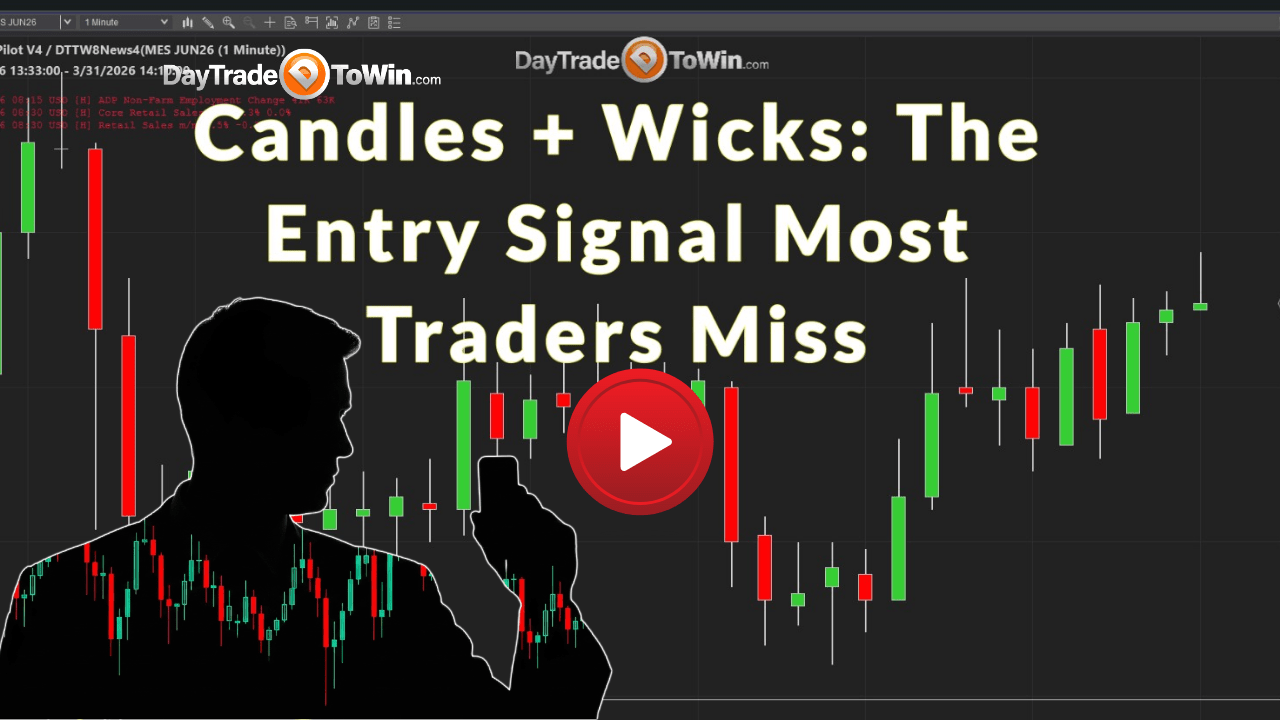
Ever see a candle suddenly plot that is much longer than the others? Of course you have – and a loss may have resulted. These candles often indicate the market is exhausted. After a candle of exhausion, you’ll probably see retracement or “confused” movement. As you can imagine, such market behavior pokes holes into many day trading strategies, especially indicators. The Atlas Line can even fall victim unless you know how to filter out oversold or overbought market conditions. Watch the video above to see how John Paul calculates whether it’s worth trading under these conditions.
In NinjaTrader, set the ATR to a Period value of four. Take the current value of the ATR and double it. Remember the result. Next, subtract to determine the point distance between the entry signal (ex. – Dbl Bar Short or Dbl Bar Long) and the current price the Atlas Line is plotting at (the pink value on the right axis in the video). Remember this result. If the first result is less than the second result, you know the market is overbought / oversold and not worth trading. By not trading, you have filtered out a potential loss. Watch the video a couple times as the visual explanation helps a great deal more.
We still put overbought oversold trades on the Atlas Line Recent Trades Page. You can imagine how much more effective the Atlas Line is once you know all of the proper filtering techniques. You can see a four-month report of 2012 trading the Atlas Line here.
Recorded last week, John Paul pulls up his charts, shows off the Atlas Line and provides valuable information to beginner traders.
Here’s a list of the highlights:
- 2:00 – Why most indicators will not be helpful to your trading
- 6:00 – Three stop strategies we like to use
- 23:00 – Best markets of trade with Atlas Line and in general
- 24:00 – Atlas Line Strength and Pullback trades (note the actual techniques are taught in the client-only webinar)
- 26:00 – News events and stop losses
- 29:00 – Atlas Line on NQ market
- 33:00 – Atlas Line profit targets and general strategy
- 48:00 – Why it can be good to set the profit target a point or two in front of the original target
- 52:00 – Why trade with a five-minute chart
The last time we calculated our Atlas Line monthly results was back in August 2012. Let’s take a look at September through December, 2012. Remember, past performance is not indicative of future results. There is substantial risk of loss in day trading.
Data used is from the Recent Trades page.
Calculations were performed manually – there is room for human error.
September, 2012
Total # of trades = 48
Total # of days traded = 19
Total net profit or loss (using 10 contracts excl. fees, slippage, etc.) = +$14,500
October, 2012
Total # of trades = 60
Total # of days traded = 20
Total net profit or loss (using 10 contracts excl. fees, slippage, etc.) = +$11,125
November, 2012
Total # of trades = 74
Total # of days traded = 21
Total net profit or loss (using 10 contracts excl. fees, slippage, etc.) = +$27,325
December, 2012
Total # of trades = 65
Total # of days traded = 20
Total net profit or loss (using 10 contracts excl. fees, slippage, etc.) = +$18,625 These December, 2012 results were updated on January 10, 2013 to include the complete month.
Here is the long-awaited webinar presentation from last Friday (December 21, 2012). John Paul demonstrates the Atlas Line live across a variety of charts, explaining how this indicator can be used to identify trends. By knowing the direction of the market in advance, you can position trades long or short ahead of time. Entry prices are provided to you automatically by the indicator, letting you know exactly when to enter. The included live training will show you how to manage the trade including the three different stop strategies, including the proprietary Pullbacks and Strength trades. You can also get an idea of how to set up your charts correctly.
Back in January of 2012, John used the “January Effect” to predict where the major indices will be by the end of the year, either up or down compared to where they were at the start:
Well, here we are. And what does the ES, an equity index futures contract, look like for 2012?
As the image indicates, the E-mini S&P 500 shows that price has climbed over 100 points to its current position since the end of January, thus confirming John Paul’s prediction is correct. The year isn’t over yet, but the chances of a 100+ point catastrophic drop are incredibly low.
Based on the long-term reliability of the January Effect, professional traders and economists can confidently buy when price is low to great advantage. You can bet that we’ll be watching what January 2013 indicates for the upcoming year’s bullish or bearish trend!
In this webinar presentation, see why it’s better to trade with a clean chart and reliable strategies. The Atlas Line is software that provides entry signals for your charting platform (NinjaTrader, TradeStation or eSignal). The plotted line provides an indication of where you should be trading; either long or short. With the three stop strategies, you can reduce risk by trading with a complete plan. Take a look at the ES, NG and GC charts in the video.
At about 23 minutes in, John Paul teaches Yo-Yo Bars. Yo-yo bars are candles that “try” to go higher or lower but cannot. By learning to recognize them, you can better gauge price movement for managing trades. Since this method is price action based, it works well with the Atlas Line (six month or lifetime license available).
Visit this page to get three more free strategies delivered to your email.
Traders – for Thursday, December 13, 2012 you will need to roll over your CME Equity Index Futures contracts to the new quarterly contract month (March, 2013 aka 03-13 in NinjaTrader).
Here’s how to do it:
1. Go to NinjaTrader’s Control Center > Tools > Instrument Manager…
2. For example, under name, type in “ES” for E-mini S&P 500 and click Search
3. For Expiry at the bottom, select 03-13
4. Click the left arrow (◄) then click OK at the bottom
5. Open a chart or go to one that you have open and switch it to the new contract month (ES 03-13).
CFTC RULE 4.41 – HYPOTHETICAL OR SIMULATED PERFORMANCE RESULTS HAVE CERTAIN LIMITATIONS. UNLIKE AN ACTUAL PERFORMANCE RECORD, SIMULATED RESULTS DO NOT REPRESENT ACTUAL TRADING. ALSO, SINCE THE TRADES HAVE NOT BEEN EXECUTED, THE RESULTS MAY HAVE UNDER-OR-OVER COMPENSATED FOR THE IMPACT, IF ANY, OF CERTAIN MARKET FACTORS, SUCH AS LACK OF LIQUIDITY. SIMULATED TRADING PROGRAMS IN GENERAL ARE ALSO SUBJECT TO THE FACT THAT THEY ARE DESIGNED WITH THE BENEFIT OF HINDSIGHT. NO REPRESENTATION IS BEING MADE THAT ANY ACCOUNT WILL OR IS LIKELY TO ACHIEVE PROFIT OR LOSSES SIMILAR TO THOSE SHOWN.
GOVERNMENT REGULATIONS REQUIRE DISCLOSURE OF THE FACT THAT WHILE THESE METHODS MAY HAVE WORKED IN THE PAST, PAST RESULTS ARE NOT NECESSARILY INDICATIVE OF FUTURE RESULTS. WHILE THERE IS A POTENTIAL FOR PROFITS THERE IS ALSO A RISK OF LOSS. A LOSS INCURRED IN CONNECTION WITH TRADING FUTURES CONTRACTS CAN BE SIGNIFICANT. YOU SHOULD THEREFORE CAREFULLY CONSIDER WHETHER SUCH TRADING IS SUITABLE FOR YOU IN LIGHT OF YOUR FINANCIAL CONDITION SINCE ALL SPECULATIVE TRADING IS INHERENTLY RISKY AND SHOULD ONLY BE UNDERTAKEN BY INDIVIDUALS WITH ADEQUATE RISK CAPITAL.
ANY ADVISORY OR SIGNAL GENERATED BY DAY TRADE TO WIN IS PROVIDED FOR EDUCATIONAL PURPOSED ONLY. ANY TRADES PLACED UPON RELIANCE ON WWW.DAYTRADETOWIN.COM SYSTEMS ARE TAKEN AT YOUR OWN RISK FOR YOUR OWN ACCOUNT. PAST PERFORMANCE IS NO GUARANTEE OF FUTURE RESULTS. WHILE THERE IS GREAT POTENTIAL FOR REWARD TRADING COMMODITY FUTURES, THERE IS ALSO SUBSTANTIAL RISK OF LOSS IN ALL TRADING. YOU MUST DECIDE YOUR OWN SUITABILITY TO TRADE OR NOT. FUTURES RESULTS CAN NEVER BE GUARANTEED. THIS IS NOT AN OFFER TO BUY OR SELL FUTURES OR COMMODITY INTERESTS.
READ OUR FULL RISK DISCLOSURE AND DISCLAIMER STATEMENT