When trading the E-mini S&P and other futures, you generally want to be trading the most liquid contract.
On a March quarterly basis (March, June, September, December), contracts expire. See the CME page for the rollover and expiration dates.
First, I’ll show you how to get the new E-mini S&P contract chart on your NinjaTrader platform (ES 06-13 in this example):
1. In NinjaTrader’s Control Center, go to Tools > Instrument Manager > Under Name, type “ES” without quotes > Click the listing for E-mini S&P 500 so it turns blue (note that the expiry on the bottom automatically “knows” that 06-13 is the new contract) > Click the left arrow button so the new market / contract is added to the instrument list on the left > Click OK
2. In NinjaTrader’s Control Center, go to File > New > Chart and double click ES 06-13 and configure as recommended (ex. – 5 minute chart, Default 24/7 session template, 30 days of data) > Click OK
Now, you should have two charts up – one from ES 06-13 and the other the soon to expire ES 03-13.
Let’s at the volume to see which contract is the most liquid and should be traded. The easy way is to compare the close to real-time volume of both contracts on the CME page. Again, you should be trading the contract with the most volume.
Another way is to compare the volume using only NinjaTrader:
1. Right click each chart and go to Indicators > Double click VOL > and click OK
2. You should see blue bars on the bottom of the chart. Scroll all the way to the right and look at the current Volume level in blue.
3. Compare this value between both charts and trade the contract with the highest Volume.
Generally, you can continue trading the soon-to-expire contract until a couple days before it expires or until the volume of the old contract is surpassed.
For this current 03-13 to 06-13 E-mini transition, we recommend switching over tomorrow or next Monday.
Note that when a contract starts to die off, you’ll see many dojis and gaps on your chart.
Speed in the world of trading is everything. In the beginning, floor traders would be huddled together shouting orders inside the major exchanges. On average, these orders would take about 11 seconds to execute a trade. Nowadays, 50 to 70% are now executed by an algorithm at a speed rate and scale beyond our comprehension. Do yourself a favor and take 20 minutes to watch the video above. Then stumble into our trading courses page to arm yourself with strategies that work for regular, retail trader like yourself.
At first, you’ll visit a small New Jersey trading firm. Trading time, at the most precise level, is often measured in microseconds (millionths of a second). By finding the number of microseconds since midnight of the previous day, you have a highly precise scale to occur when price movements occur. Using this scale, a high frequency trader might do 1000 trades each minute in quick bursts. Depending on the high frequency trading algorithm, a number of buy and sell orders will be blasted out to see if there’s any response. When another computer bites on one, the original computer will cancel the ones that didn’t “stick.” A perfect example of algorithmic trading occurred recently with Kraft (KRFT). An algorithm bought a bunch of Kraft and effectively jammed the other robots. The algorithm was then able to sell at much higher prices to other algorithms, netting a gain of over a half million dollars in a matter of seconds.
“There’s always an advantage to getting information faster than the other guy.” Take the case of news events. If you’re aware of positive news regarding a company that hasn’t yet hit the wire, you can make a lot of money on the buy low, sell high principle. With electronic markets, this “get there first” idea created a race of who can get their orders to the exchange first. Yes, your physical distance to the exchange matters when you’re trading robotically. The speed of light is about a foot per nanosecond (one billionth of a second). If you can get in and out of trades very fast, millisecond after millisecond, you can game the system in your favor. Serious algorithmic traders began buying up real estate next to the exchange for the quickest connection possible. Eventually, regulators stepped in and allowed servers (for executing trades) to be hosted inside the mothership (exchange). To make it fair, every single computer in the NYSE server room in the NYSE has EXACTLY the same network cable length. Consider the amount of vertically stacked computers in this room that is the size of three football fields. This ensures competitive fairness to all the computers in the room placing algorithmic trades. These computers are owned or rented by banks, hedge funds, brokers, and financial institutions.
Is the race for the fastest connection over at this point? No. There are 13 regulated exchanges and roughly 50 non-public dark pools. You can imagine the amount of complexity created by those who need to use trading data from one exchange for strategy purposes in another exchange. For example, say Chicago is known for its commodities (basic goods like oil, soy beans, corn, etc.). Let’s say the price of oil goes up in Chicago. You can pretty much bet a company like Exxon will also go up in New York, although the time between the two is not instantaneous. This actually created a race to lay the straightest fiber line from Chicago to New York. Some reports say a company spent eight figures to lay a line with a 13ms connection through a mountain. Right now, a product is underway to create a series of towers to beam signals between the two exchanges, as light travels faster through air than fiber optics cable. For the big high frequency trading players, this arms race is a huge drain on resources. If you don’t adopt a new connection technology and your competitors do, you’ll miss out. This is actually great for the little guy traders like us – trading has become cheaper. In 1992, it would have been $100 to trade 1000 shares. Now it will cost around 10 bucks.
On May 6, 2010 at 2:42 in the afternoon, the flash crash occurred. At 2:25 p.m., an emergency “circuit breaker” stopped the market after it fell 1000 points. In two and a half minutes, several hundred billion dollars vanished. When the market came back on five seconds later, the markets bounced right back up. Two and a half minutes later, the market was 600 points higher. Still, 2.5 years later, we still don’t know exactly what happened. The official U.S. regulators investigated and said it was the result of one trader in New York’s overly aggressive algorithm going haywire. This claim is still disputed among experts. The scary part is that hundreds of billions of dollars can be lost in the blink of an eye, and years later, we still don’t know exactly what happened. Within the last decade, we’ve entered an era where complexity, speed and volume is no longer human readable – we don’t know until it’s too late.
Watch this video to learn a great forecasting technique. It will help you determine whether the day will be trending (heading in one direction for the most part) or whipsaw (full of choppy, difficult to trade, back and forth activity).
The E-mini S&P 500 (ES) experienced a trending day on February 27, 2013. At 1:17 in the video, you can see how price slowly climbed throughout the day. If you can know in advance whether the day will trend or not, your trading can greatly improve. The technique in this video works for many market opens, but the 9:30 a.m. US/Eastern market open is used. John Paul demonstrates how to split the trading day into three separate sections (A, B and C) at distinct times. Each section has its own characteristics as discussed at 3:40. The method – what to do with the A, B and C sections, is explained at around 5:20. In short, section A can tell you with reasonable certainty whether or not the day will trend. Using the ATR, you can position your profit target and stop loss. You will need to wait for price to prove where it wants to go – either two consecutive closes above or below the previous range. At 9:28 in the video, see what the Atlas Line produced for orders. Visit our videos page to see more videos or the Atlas Line page to see software that works for trading trends.
For all the traders out there this Valentine’s day, we present to you a gift of love! The Get Started Day Trading Guide is entirely free. In just a few pages, you’ll be up and running with the NinjaTrader 7 platform, see live candles plot on your chart, and understand the basics of trading. We highly recommend that you read this, as it covers the most common questions about day trading that we’re asked at Day Trade To Win.
Here’s what’s included:
• NinjaTrader download link and demo license key
• How to set up a paper trading account with NinjaTrader
• Requirements for day trading (computer speed, broker account size, fees, etc.)
• Setting up your charts the way we recommend
• Navigating charts, scrolling through history and the axis
• Understanding price bars and tick increments
• Saving your trading setup
• The best way to begin trading for profit
Only a monthly basis, we like to report how well the Atlas Line has performed. January 2013 was another successful month as indicated by these totals…
January, 2013
Total # of trades = 54
Total # of days traded = 21
Total net profit or loss (using 10 contracts excl. fees, slippage, etc.) = +$11,875
Data used in this calculation is from the Recent Trades page.
Calculations were performed manually – there is room for human error.
Remember, past performance is not indicative of future results. There is substantial risk of loss in day trading.
» Get the Atlas Line Signals «
Live training is included with purchase. After training, you will receive a video recording so you can always refresh your memory. The Atlas Line is not hard at all to use and free email support is included.
Want to know if the major U.S. indices will be higher at the end of this year than they are now? With the January Effect, you can figure out the overall trend of U.S. indices with decent accuracy. Watch the video to learn how to take advantage of the expected upward movement. The January Effect has been used by traders for many years to accurately determine long term strategies and optimum buy and sell points. All you need to do is look at the first month of the year, January, and see how price behaved. If price was up at the end of the January compared to the start, the same will hold true for the year.
You can see our 2012 January Effect post to see how this proved correct. The January 2012 E-mini opened at around 1310 and closed nearly 100 points higher at 1434.
Now that January 2013 is over, we have an idea of where price will be at the end of December, 2013.
Again, another up year! What can you do with this information? Consider buying the market when price is at its lowest point with an expectation of an upward move later in the year. Watch out for pullbacks! John Paul will recommend an opportune buying time soon – keep checking back. Note that the January Effect is not a guarantee, but has historically been very accurate.
Jim Cramer, made popular through his CNBC show Mad Money, discusses manipulation in this video. With as little as $5 million from his hedge fund, Jim confesses that he was able to influence futures markets in order to make profit more easily. By creating a level of activity with the proper funding, you can drive futures in a favorable direction. Regarding manipulation tactics, Jim says, “It’s a fun game. It’s a lucrative game. You can move it up and then fade it. That often creates a very negative feel.” When you boost a market up and then the real market comes in, a negative view is created. For anyone in a hedge fund, Jim believes this is a strategy very worth doing. “It’s legal, fast and satisfying,” he says. “No one else in the world would ever admit that.” As you’re probably well aware, the U.S. experiences a major economic crash in 2008. This video of Jim was recorded in 2008. Government oversight has since increased to prevent some forms of manipulation.
At about 3:40 in the video, Jim gives an example of how a hedge trader can spread rumors in order to paint the picture they want of a specific stock. In the example, he shorts Apple (AAPL) and wants to keep the stock down by creating an image that the latest Apple idea is not ready for prime time. Through bluffing and his contacts at the trading desk and phone service providers, Jim believes he can keep the stock down. He says that this is all what’s really going on under the market that you don’t see. “What’s important when you’re in that hedge fund mode is to not do anything remotely truthful. The truth is so against your view that it’s important to create a new truth to develop a fiction.” Watch the rest of the video to gain more insight into the extent of manipulation.
With John Paul’s experience as a floor trader and knowing the techniques manipulators use first-hand, you can learn to trade consistently. Our price action methods are only based on current price conditions; not projections, not news stories, not trends or market behavior of the last year, months or days. By learning to recognize specific patterns in the market as they occur, you can become a successful price action trader. Take part in the Mentorship training where you can learn more in depth on how to trade through the manipulation.
Babak took part in our Mentorship Program in August, 2012. Before he was an income trader, Babak was a teacher and network engineer for over 20 years. An unsteady career led him to create his own business as a professional trader. As a professional trader, he first began buying and selling stocks. For three years, he day traded stocks but found the results to be inconsistent; nothing he could count on as an income. Through research, he realized trading futures was more cost effective than trading stocks. On other day trading websites, he participated in classes and seminars that focused on watching indicators and broad market conditions as a gauging factor on his trades. However, these strategies did not provide him with enough confidence. He found his timing to enter and exit to be way off due to following lagging indicators.
By finding Day Trade to Win’s price action methods, Babak became successful. He was able to pinpoint entry and exit strategies and stay on the “green side” for a change. He realized indicators are always lagging to interpret the current condition of the market.
“The funny thing is John’s method is so simple to follow. Having live webinar sessions recorded make it so easy to go back and reinforce the lessons. I can still access the recorded sessions that I attended and review them as many times as I need. They’re still there. After eight weeks of Mentorship Training and practicing with paper money, I became consistent with the number of my winning trades as opposed to the losing trades. I know every morning how to set up my charts, what to look for, and most importantly, how to keep emotion out of every trade I make. To me, that is a blessing and the empowerment I got from John Paul and Day Trade to Win.”
On January 23, 2013 trading the E-mini S&P 500, the Atlas Line produced a successful Long trade at 1488. This first trade was good for one point according to the market’s ATR (Average True Range). Profit targets are always based on the ATR. This type of dynamic stop reduces risk and makes your profit target match was the market is expected to be able to produce. John Paul has his “BarsBack” Atlas Line parameter set quite high, so you see the entry signals a few bars to the left of the entry candle / signal. You can see how this setting applies with the Short trade at 1486.50. This video shows the trade occurring live, with a profit target of 1.25 points. The best time to trade the Atlas Line is the morning (US/Eastern), but you can trade it on nearly and market that trades 24 hours a day with reasonable volatility. Trading is simple and objective when you have your profit targets and stops known in advance.
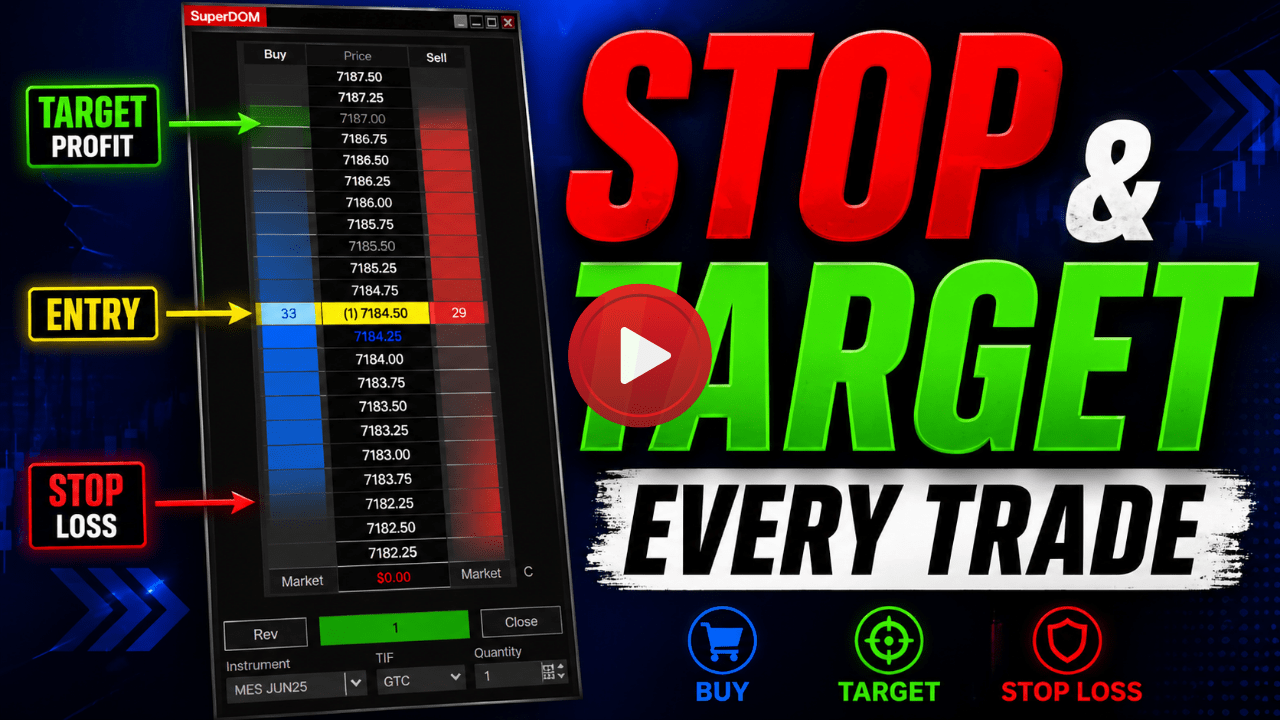
1. Have an entry and exit plan Knowing when to get in, when to get out, and what to do if the trade fails is extremely important. In other words, have an entry strategy, profit target and stop loss.
2. Avoid the first 15 minutes when a market opens This period of time is usually highly volatile – automated systems, premarket trades and unfounded trades produce choppy price action. You are better off waiting until it levels out and using the ATO (At the Open) Strategy taught in the Mentorship Program.
3. Understand market orders vs. limit orders Market orders tell your broker to buy or sell at the best available price. Limit orders let you control the maximum and minimum prices at which you will buy and sell. Limit orders are better because you have more control and can be used more easily with strategies.
4. Avoid margin risk The whole point of trading using a margin is to increase the amount of potential returns on each trade. Leveraging more money puts you at risk so keep your margins in check. Trade with a 4:1 intraday margin, if possible.
5. Don’t guess or follow instincts Always have a strategy. You need to know objectively what conditions will trigger your entry. And these conditions have to be consistently successful.
6. Keep a log of your trading activity Your trading software can keep track of your profit and loss performance. You should keep track of your personal development as a trader – improve upon your mistakes. The paper remembers better than the mind.
7. Paper / sim trade first Practice makes perfect. Paper trading with a live data feed will simulate the experience of live trading as closely as possible without spending real money. Paper trade for as long as you need to before going live.
8. Be wary of where your trading advice comes from The markets are inherently unpredictable for the most part. In the business of trading, there are many who are a little too confident. Do your research before putting anyone’s advice to the test.
9. Control your losses When trading with real funds, only trade with money you can afford to lose. If trading ever gets you into financial trouble, take a break and refine your strategy by paper trading with live data.
10. Allow yourself enough time to learn A baby needs to crawl before being able to walk. Don’t panic at the first hint of loss and throw your strategies out the window. Trading is emotional. Know that you will have losing trades. Being consistent requires discipline with the right, objective trading methods. See our courses to find out more.
CFTC RULE 4.41 – HYPOTHETICAL OR SIMULATED PERFORMANCE RESULTS HAVE CERTAIN LIMITATIONS. UNLIKE AN ACTUAL PERFORMANCE RECORD, SIMULATED RESULTS DO NOT REPRESENT ACTUAL TRADING. ALSO, SINCE THE TRADES HAVE NOT BEEN EXECUTED, THE RESULTS MAY HAVE UNDER-OR-OVER COMPENSATED FOR THE IMPACT, IF ANY, OF CERTAIN MARKET FACTORS, SUCH AS LACK OF LIQUIDITY. SIMULATED TRADING PROGRAMS IN GENERAL ARE ALSO SUBJECT TO THE FACT THAT THEY ARE DESIGNED WITH THE BENEFIT OF HINDSIGHT. NO REPRESENTATION IS BEING MADE THAT ANY ACCOUNT WILL OR IS LIKELY TO ACHIEVE PROFIT OR LOSSES SIMILAR TO THOSE SHOWN.
GOVERNMENT REGULATIONS REQUIRE DISCLOSURE OF THE FACT THAT WHILE THESE METHODS MAY HAVE WORKED IN THE PAST, PAST RESULTS ARE NOT NECESSARILY INDICATIVE OF FUTURE RESULTS. WHILE THERE IS A POTENTIAL FOR PROFITS THERE IS ALSO A RISK OF LOSS. A LOSS INCURRED IN CONNECTION WITH TRADING FUTURES CONTRACTS CAN BE SIGNIFICANT. YOU SHOULD THEREFORE CAREFULLY CONSIDER WHETHER SUCH TRADING IS SUITABLE FOR YOU IN LIGHT OF YOUR FINANCIAL CONDITION SINCE ALL SPECULATIVE TRADING IS INHERENTLY RISKY AND SHOULD ONLY BE UNDERTAKEN BY INDIVIDUALS WITH ADEQUATE RISK CAPITAL.
ANY ADVISORY OR SIGNAL GENERATED BY DAY TRADE TO WIN IS PROVIDED FOR EDUCATIONAL PURPOSED ONLY. ANY TRADES PLACED UPON RELIANCE ON WWW.DAYTRADETOWIN.COM SYSTEMS ARE TAKEN AT YOUR OWN RISK FOR YOUR OWN ACCOUNT. PAST PERFORMANCE IS NO GUARANTEE OF FUTURE RESULTS. WHILE THERE IS GREAT POTENTIAL FOR REWARD TRADING COMMODITY FUTURES, THERE IS ALSO SUBSTANTIAL RISK OF LOSS IN ALL TRADING. YOU MUST DECIDE YOUR OWN SUITABILITY TO TRADE OR NOT. FUTURES RESULTS CAN NEVER BE GUARANTEED. THIS IS NOT AN OFFER TO BUY OR SELL FUTURES OR COMMODITY INTERESTS.
READ OUR FULL RISK DISCLOSURE AND DISCLAIMER STATEMENT